
Tom Christ, PT, DPT, OCS • September 22, 2026
Week 2 Fantasy Football Injury Recap: 2026
Week 2 NFL injury analysis for Jayden Daniels, Jaxson Dart, Malik Nabers, Saquon Barkley and more, including timelines and fantasy impact.
2026 Week 2 Fantasy Football Injury Recap
Week 2 was brutal; I cannot remember a single week in a long time that led to more injuries to big-time names. Jayden Daniels dislocated the same elbow that gave him problems last season, Jaxson Dart may be facing an extended absence, and Malik Nabers added a recurrent shoulder dislocation to an already complicated return from ACL reconstruction. Several other prominent players left the field with injuries that could affect more than just their Week 3 availability.
However, the diagnosis alone does not tell us what these injuries mean for fantasy football. Some players, including Aaron Jones and Mike Evans, appear to have avoided significant setbacks. Others may return quickly but remain vulnerable to re-injury or reduced production. Players such as Dallas Goedert and Rico Dowdle could be cleared to play well before their fantasy output completely returns to baseline.
This recap breaks down the expected time missed, re-injury risk, mechanical limitations, and historical fantasy impact for every relevant injury from Week 2. Several diagnoses and timelines remain incomplete, so projections will continue to evolve as imaging results and practice reports become available.
Quarterbacks
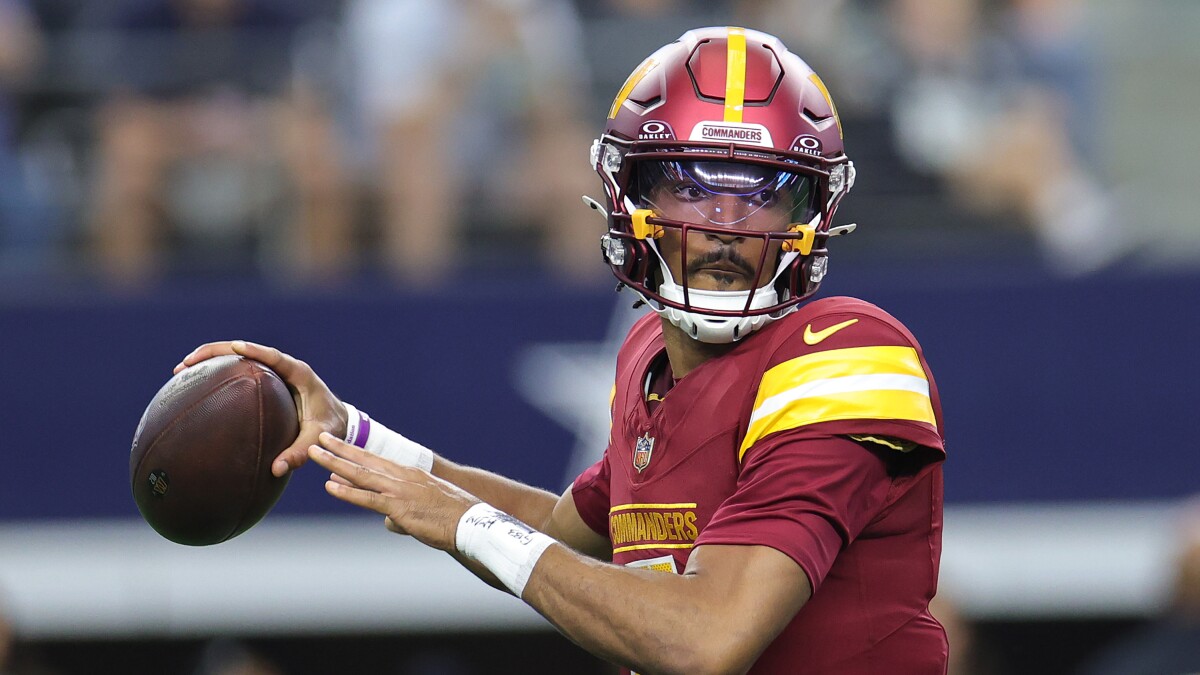
Jayden Daniels — Washington Commanders
Injury: Recurrent left elbow dislocation
Expected time missed: To be determined
Re-injury risk: High
Fantasy impact: Marcus Mariota would start while Daniels is unavailable.
Analysis:
This is a major problem for Daniels, the Commanders, and his fantasy managers. We all remember Daniels dislocating this same elbow last season. At the time, reports suggested there was no significant ligament damage and that surgery would not be required. That was excellent news, but it was also somewhat surprising because a complete elbow dislocation almost always involves some degree of ligament damage. It is possible Daniels has underlying joint hypermobility, but we do not know that for sure.
Recurrent dislocations are especially concerning because they suggest the passive stabilizers of the elbow did not fully regain their ability to keep the joint in place. Each additional dislocation can further damage the ligaments, cartilage, and surrounding structures, potentially making the elbow progressively less stable.
As of this writing, Daniels is still gathering information and determining the best path forward. The current belief is that he will attempt to rehab for several weeks and return this season, potentially followed by surgery during the offseason.
From a fantasy perspective, the good news is that this is his non-throwing arm. If Daniels returns this season, the injury should not significantly affect his throwing power or accuracy. The larger concerns will be protecting himself when he runs, absorbing contact, and avoiding another dislocation. Fantasy managers will be holding their breath every time he leaves the pocket or takes a hit.
Expect Daniels to miss a substantial amount of time, with his return dependent on whether he can regain enough stability and confidence to protect the elbow.
Caleb Williams — Chicago Bears
Injury: Grade 1 right hamstring strain
Expected time missed: Week-to-week
Re-injury risk: Moderate
Fantasy impact: Tyson Bagent would start if Williams misses time.
Analysis:
Caleb should be okay, but he will likely miss at least a few games with his right hamstring strain. As a right-handed passer, his right leg helps initiate force from the ground and transfer it through his hips and torso during the throwing motion. The hamstring assists with hip extension and helps stabilize the pelvis, meaning this injury could temporarily affect his ability to generate power from a stable base.
Caleb is also a highly mobile quarterback who relies heavily on his legs for escapability and rushing production. Even after he is cleared to return, Chicago may initially limit his designed runs and encourage him to avoid unnecessary scrambling to reduce his risk of aggravating the injury.
In our sample of 15 quarterbacks with prior hamstring injuries, they averaged 2.1 games missed and experienced a major decline in fantasy production during their first five games after returning.
Caleb was excellent in Week 1, and I would still expect him to outperform most waiver-wire options once he returns. However, if he follows the historical trends, fantasy managers should not expect MVP-level production again until closer to the middle of the season.
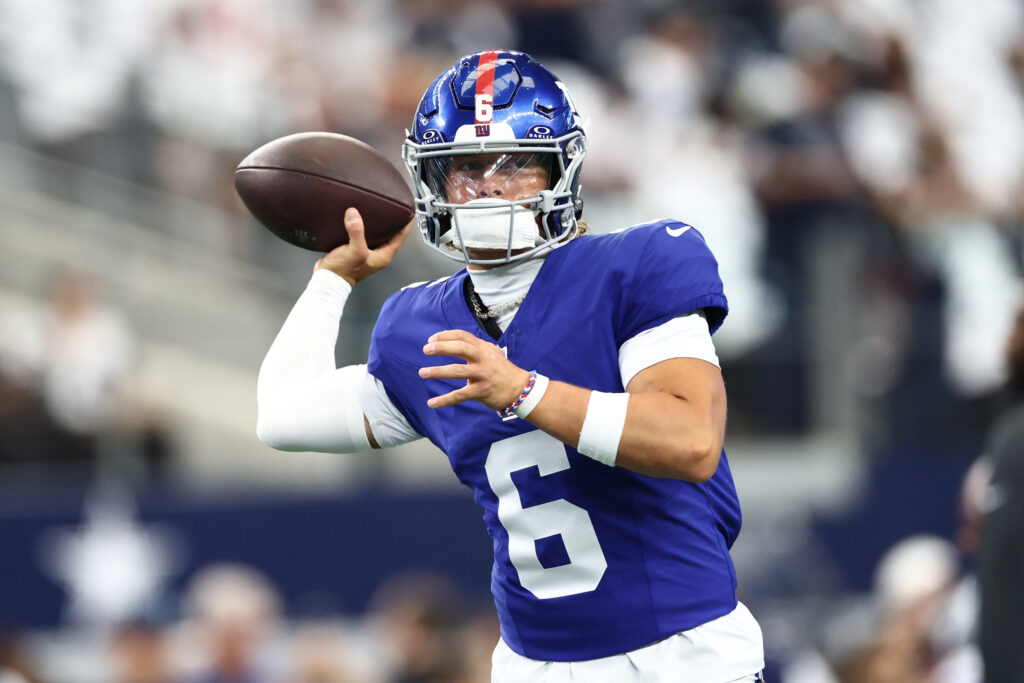
Jaxson Dart — New York Giants
Injury: Left MCL sprain, possibly more
Expected time missed: Potentially season-ending
Re-injury risk: High
Fantasy impact: Jameis Winston would start while Dart is unavailable.
Analysis:
The outlook for Dart has become significantly more concerning. New reporting suggests he may miss an extended portion of the season, with the possibility that his 2026 campaign is over. That is a major change from the initial expectation of a relatively straightforward MCL sprain.
The early optimism and lack of an immediate season-ending announcement make a complete ACL tear appear less likely, but they do not rule it out. Teams often wait for imaging and specialist evaluations before announcing the full diagnosis. A prolonged absence could reflect a Grade III MCL tear, additional ligament involvement, meniscus damage, a bone injury, or another structure that was not identified in the initial reporting.
Dart was fortunate that his foot did not appear to be firmly planted during the contact. This may have limited the rotational force transferred through the knee, but the mechanism was still violent enough to create substantial valgus stress and potentially damage more than the MCL.
For a right-handed passer, the left leg is the lead leg during the throwing motion. The MCL helps stabilize that knee against inward collapse as he steps into and finishes his throw. If this ultimately proves to be an isolated MCL injury, I would not expect a meaningful long-term change in his passing mechanics once the ligament has healed and he has restored his strength and stability.
His rushing production would likely take longer to return. Dart may initially be less willing to plant, cut, scramble, or absorb contact, and the Giants could reduce his designed rushing workload to protect the knee.
Our sample of quarterbacks returning from MCL injuries is too small, just five players, to draw meaningful statistical conclusions. Across running backs, wide receivers, and tight ends, players average between 2.7 and 3.7 games missed and frequently experience a significant decline in fantasy production after returning. Those averages would not apply well if Dart has a Grade III tear or additional structural damage.
At this point, fantasy managers should prepare for Dart to miss a substantial portion of the season, with a season-ending absence now possible. His long-term fantasy value can remain strong if the ACL is intact and the knee heals appropriately, but his 2026 value has taken a major hit while we wait for the complete diagnosis.
Running Backs
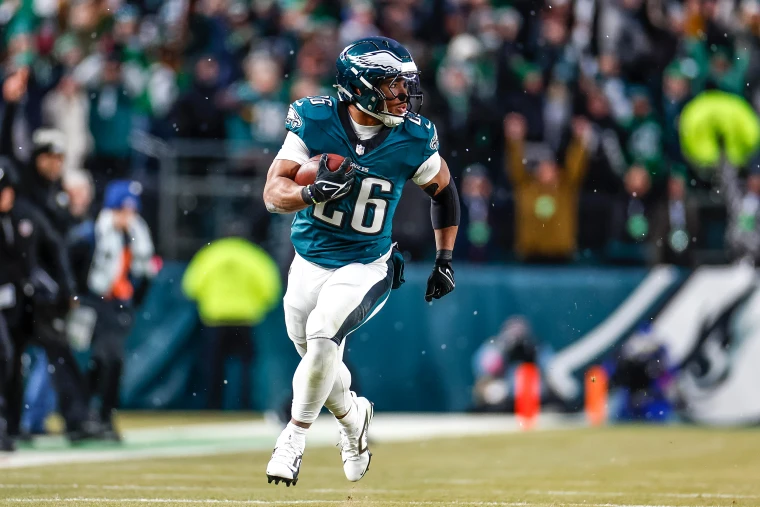
Saquon Barkley — Philadelphia Eagles
Injury: Left-arm stinger
Expected time missed: Day-to-day
Re-injury risk: Moderate
Fantasy impact: Tank Bigsby and Will Shipley would receive additional opportunities if Barkley cannot play.
Analysis:
Barkley suffered a stinger on the first play of Sunday’s game. Although he briefly returned during the second half, he remained sidelined for most of the game.
A stinger is an umbrella term for an injury involving the brachial plexus or a cervical nerve root. The brachial plexus is a collection of nerves that travels from the neck into the shoulder and arm. Symptoms can range from burning, numbness, and tingling to weakness, with their duration varying from a few seconds to several weeks.
Most stingers involve a type of nerve injury called neurapraxia. This describes a temporary disruption of nerve conduction caused by compression or stretching without structural disruption of the nerve itself. These injuries are often short-lived, with symptoms resolving within minutes or days. Persistent weakness would be more concerning and could delay Barkley’s return.
Nerve injuries can also have a cumulative effect. After a previous stinger, it may take less force to irritate the nerve again, particularly if strength, mobility, or nerve function has not completely returned. Barkley has experienced stingers or neck injuries on two other occasions during his career, making his history worth considering as we monitor his recovery.
As of this writing, we do not have a meaningful update on Barkley’s status. It is certainly possible that he returns in Week 3, but he will carry an elevated risk of another stinger. If his strength and sensation have returned and he avoids another episode, there is no reason to expect a meaningful decline in his fantasy production.
J.K. Dobbins — Denver Broncos
Injury: Hamstring injury
Expected time missed: To be determined
Re-injury risk: High
Fantasy impact: Jonah Coleman and RJ Harvey would receive additional work.
Analysis:
The oft-injured Dobbins appears to have avoided a more significant setback, with his hamstring injury currently considered mild.
Hamstring injuries can be challenging because they affect acceleration and the ability to reach and maintain top speed. Dobbins is not primarily viewed as a speed back, making him less likely to experience a major decline in fantasy production once he returns. Interestingly, our data shows minimal to no average change in fantasy production among running backs returning from hamstring injuries.
One possible explanation is that hamstring demand increases as an athlete approaches maximum velocity, which often requires a longer runway than running backs receive on most plays. However, the hamstring also contributes during acceleration, cutting, and hip extension, so the injury can still affect a running back before reaching top speed.
Re-injury is the primary concern. Hamstring recurrence rates are high, particularly during the first four weeks after returning, when the tissue may feel normal before it has completely regained its strength and capacity.
For now, Dobbins appears to have avoided anything major. His fantasy outlook should remain relatively stable once he returns, but his workload and health will need to be monitored closely during his first month back.
Jonathon Brooks — Carolina Panthers
Injury: Groin injury aggravation
Expected time missed: Week-to-week
Re-injury risk: High
Fantasy impact: Chuba Hubbard would handle a larger workload while Brooks is unavailable.
Analysis:
Brooks will miss a few weeks after aggravating the groin injury he was already managing during training camp. Groin injuries do not typically cause a major decline in on-field production, but their high recurrence rate can make players difficult to trust from week to week.
The groin consists primarily of the hip adductor muscles, which help stabilize the pelvis when the body is supported on one leg. They also contribute to acceleration, running, cutting, and pulling the leg back toward the body. While these muscles are important, they work alongside larger muscle groups that drive most of these movements. That is why players can often remain productive through a mild groin injury once their pain and strength are manageable.
The concern for Brooks is that this is already an aggravation. Returning before the tissue had fully regained its strength and workload capacity may have restarted the recovery process and increased the likelihood of another setback.
Running backs in our data average 1.8 games missed following a groin injury and show almost no decline in fantasy production after returning. Brooks should remain productive when healthy, but his re-injury risk will make his availability difficult to trust.
Rico Dowdle — Pittsburgh Steelers
Injury: Toe injury
Expected time missed: To be determined
Re-injury risk: Moderate
Fantasy impact: Jaylen Warren would receive additional touches if Dowdle misses time.
Analysis:
Dowdle exited Sunday’s game with a toe injury, and as of this writing, we still do not have much information regarding the severity or specific toe involved.
Toe injuries can be extremely difficult for running backs to manage. If the injury involves the big toe, the joint must tolerate substantial extension, often approaching 60 to 90 degrees, while remaining strong and stable during sprinting, cutting, and push-off. Any injury that restricts this motion, compromises the surrounding tendons or ligaments, or makes push-off painful can reduce an athlete’s explosiveness.
Even a seemingly minor toe injury can affect acceleration and change-of-direction ability because the player loads the forefoot during nearly every step. The fantasy implications will depend heavily on the exact structure involved and whether Dowdle can push off normally.
Running backs in our data average 1.8 games missed following toe injuries and experience a massive 41% decline in fantasy points during their first game back. Fortunately, production returns close to baseline by Game 2 after injury.
Dowdle may struggle during his first game back, but the historical trends suggest that any decline should be relatively short-lived if he avoids a setback.
Aaron Jones — Minnesota Vikings
Injury: Knee injury
Expected time missed: No time currently expected
Re-injury risk: Moderate
Fantasy impact: DeeJay Dallas would receive additional work if Jones experiences a setback.
Analysis:
Jones briefly exited Sunday’s game with a knee injury but returned and finished with a solid performance. He is reportedly dealing with soreness, but as of this writing, there has been no structural damage reported.
Jones is an older running back with a substantial injury history, so it is not unusual for him to manage soreness throughout the season. His ability to return and finish the game is encouraging and suggests the knee remained functional under a game-level workload.
For now, this does not appear to be a significant concern. Jones’ practice participation will be worth monitoring throughout the week, but unless he experiences increased pain, swelling, or a setback, I would not expect a meaningful effect on his fantasy production.
Jadarian Price — Seattle Seahawks
Injury: Shoulder/Chest injury
Expected time missed: To be determined
Re-injury risk: Low
Fantasy impact: Emanuel Wilson and George Holani would receive additional opportunities.
Analysis:
Price is dealing with what appears to be a mild shoulder injury that should not affect his Week 3 availability.
Shoulder injuries are generally less disruptive for running backs than wide receivers because backs do not rely as heavily on reaching away from their bodies or securing contested catches. The primary concerns are absorbing contact, protecting the football, and tolerating the impact of landing on the injured side.
Historically, running backs in our data show no average decline in fantasy production after returning from a shoulder injury. Price should be ready for Week 3 barring increased pain, limited practice participation, or a change in his reported status.
Wide Receivers
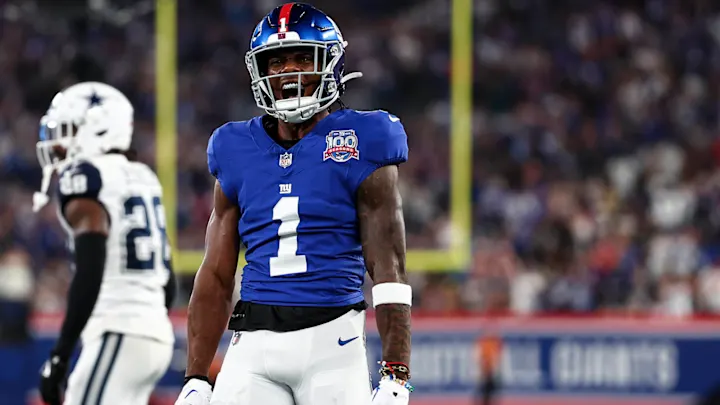
Malik Nabers — New York Giants
Injury: Right shoulder dislocation
Expected time missed: To be determined
Re-injury risk: High
Fantasy impact: Darnell Mooney and Malaki Fields would receive additional targets if Nabers misses time.
Analysis:
Nabers has a longstanding history of right shoulder instability, including multiple reported subluxations during college. He has continued to battle shoulder issues in the NFL, although none had previously forced him to miss a game.
Last night, Nabers dislocated his right shoulder while attempting to raise his arm against a defender’s resistance. He reduced it (popped it back into place) on the sideline and admirably returned to the game, although he did not record another catch.
This is a significant problem. His fantasy production may not be limited when the shoulder remains in place, but his risk of another dislocation is extremely high. NFL data shows approximately a 55% recurrence rate after an in-season shoulder instability event. Nabers was able to return this time, but every subsequent dislocation can cause additional damage to the labrum, cartilage, and other stabilizing structures. That can create progressively worse instability, cost him more time, and eventually make surgery necessary.
The good news, at least for dynasty managers, is that offseason stabilization surgery would give Nabers an excellent chance to correct the underlying instability long term. Surgery is never a guaranteed fix, but outcomes for NFL players are generally favorable.
For 2026 fantasy managers, the concern is immediate. Nabers may remain productive whenever he plays, but everyone will be holding their breath each time he reaches overhead, goes to the ground, or absorbs contact through that right shoulder.
Mike Evans — San Francisco 49ers
Injury: Hip injury
Expected time missed: Day-to-day
Re-injury risk: Low
Fantasy impact: Deebo Samuel would receive additional targets if Evans cannot play.
Analysis:
Evans exited Sunday’s game with a hip injury, but early reporting suggests he avoided anything significant. Kyle Shanahan described the injury as minor and indicated Evans could have returned if the game had remained competitive, which is an encouraging sign for his Week 3 availability.
The hip is responsible for generating force, stabilizing the pelvis, and controlling nearly every part of a receiver’s route. A more significant injury could affect Evans’ acceleration, ability to sink his hips when changing direction, and explosiveness when elevating for contested catches. However, his ability to potentially return on Sunday suggests these functions were not substantially compromised.
Evans may have his practice workload limited this week, but that would likely be precautionary. Wide receivers in our data average only a 6% decline in fantasy production following hip injuries, and the early reporting gives us little reason to expect a meaningful limitation.
Assuming Evans progresses through the week without increased pain or a setback, he should be expected to play in Week 3 and remain in fantasy lineups.
Jayden Reed — Green Bay Packers
Injury: Back injury
Expected time missed: To be determined
Re-injury risk: Moderate
Fantasy impact: Matthew Golden, Christian Watson, and Skyy Moore would receive additional opportunities.
Analysis:
Reed was carted off the field early Sunday with what is now being reported as a back injury. He remains under evaluation and is not expected to play Thursday night.
The immediate response, overnight hospital observation, and continued medical testing suggest the medical staff had enough concern for a potentially significant spine or neurologic injury to proceed cautiously. That does not confirm a spinal cord injury, but it does indicate this was more than routine back soreness.
The most encouraging news is that Reed reportedly has movement and sensation in all four extremities. This makes a catastrophic spinal cord injury much less likely, although it does not completely rule out injuries involving the vertebrae, discs, ligaments, or surrounding soft tissue.
Fantasy football is secondary in a situation like this. Reed’s timeline will depend entirely on the results of his imaging and neurologic examinations. For now, expect him to miss Thursday night, and we will continue monitoring for a more specific diagnosis and recovery timeline.
Alec Pierce — Indianapolis Colts
Injury: Left heel injury
Expected time missed: To be determined
Re-injury risk: High
Fantasy impact: Josh Downs and Deion Burks would receive additional routes and targets.
Analysis:
Re-injury was always a major concern for Pierce, who underwent offseason ankle surgery and did not begin practicing until very late in training camp. He injured the heel on that same side after getting his feet tangled with a defender. The initial contact appeared to disrupt his stride and produce multiple consecutive overstrides, with his foot landing well ahead of his center of gravity and placing substantial stress through the heel and ankle.
Pierce left the stadium in a walking boot and on crutches. Although X-rays were negative, he is seeking an additional medical opinion and is expected to spend several weeks rehabilitating the injury.
The difficult part of this analysis is that the Colts have remained very quiet about Pierce’s original procedure. Throughout the offseason, I discussed how any ankle surgery requiring a four-to-six-month rehabilitation would leave him at significantly elevated risk once he returned to football. Unfortunately, Pierce sustained another injury on the same side during just his second game back.
Expect Pierce to miss a substantial amount of time. When he returns, he will need to restore his ankle mobility, stability, strength, and explosiveness while rebuilding the general conditioning he was still trying to regain after missing most of the offseason.
His re-injury risk will remain very high, and the risk of reduced fantasy production will also be significant.
Demarcus Robinson — San Francisco 49ers
Injury: Right high ankle sprain
Expected time missed: 3–6 weeks
Re-injury risk: Moderate
Fantasy impact: Jacob Cowing would receive additional opportunities while Robinson is unavailable.
Analysis:
Robinson suffered a right high ankle sprain on Sunday and is expected to miss multiple games. Current reporting estimates a three-to-six-week absence, although the exact timeline will depend on the severity of the ligament damage and how quickly he regains the ability to run and change direction.
High ankle sprains involve the ligaments connecting the tibia and fibula above the ankle. These ligaments help stabilize the lower leg as the foot rotates and the athlete pushes into the ground. For a receiver, this injury can affect acceleration, route running, and the ability to plant and cut without pain or instability.
Robinson should be expected to miss several weeks, and returning to the lineup does not necessarily mean he will immediately be back to full speed. Receivers can struggle during their first few games after a high ankle sprain, particularly if they return before restoring their full mobility and explosiveness.
His re-injury risk and risk of reduced production will remain elevated upon his return. Fantasy managers should expect Robinson to start slowly rather than immediately returning to his previous workload and efficiency.
DJ Moore — Buffalo Bills
Injury: AC joint sprain
Expected time missed: Day-to-day
Re-injury risk: Moderate
Fantasy impact: Khalil Shakir and Keon Coleman would receive additional targets.
Analysis:
DJ Moore suffered an AC joint sprain and fortunately avoided a more significant injury. Based on where he was pointing and his initial reaction, there was concern that he may have fractured his clavicle. However, shortly after getting off the ground, Moore was walking without supporting the injured arm against his body. That was an encouraging sign, although imaging was still needed to rule out a fracture.
The AC joint connects the acromion of the shoulder blade to the clavicle. Sprains in this area can be extremely painful, particularly when reaching across the body, lifting the arm, absorbing contact, or landing directly on the shoulder. However, they usually improve relatively quickly as long as there is not a significant separation between the acromion and clavicle.
Wide receivers in our data experience an average 20% decline in fantasy points during their first game after an AC joint injury, but production returns to baseline by Game 2. Pain, reduced range of motion, and difficulty extending for passes could temporarily limit Moore even if he is cleared to play.
Re-injury is also possible, particularly if he lands directly on the shoulder again, as we saw with CeeDee Lamb a few years ago. Overall, though, this is not a terrible situation. Moore may be limited during his first game back, but the injury should not create a significant long-term concern.
Caleb Douglas — Miami Dolphins
Injury: Right ankle injury
Expected time missed: To be determined
Re-injury risk: Moderate
Fantasy impact: Ryan Miller and Malik Washington would receive additional opportunities.
Analysis:
Douglas suffered a right ankle injury while blocking when a defender rolled onto his leg. He was unable to return, but as of this writing, we do not have a more specific diagnosis or recovery timeline.
The mechanism creates concern for an ankle sprain, but we should not assume this is a high ankle injury without additional reporting or imaging. The fantasy implications will depend heavily on which ligaments or other structures were injured and how much stability he retains.
Ankle injuries can affect a receiver’s ability to accelerate, plant, cut, and create separation. Even when a player can run in a straight line, changing direction and pushing off the injured side may remain painful or unstable.
Douglas should be considered questionable until we receive more information. His practice participation will give us a better idea of the severity, but for now, the diagnosis and expected time missed remain unclear.
Tight Ends
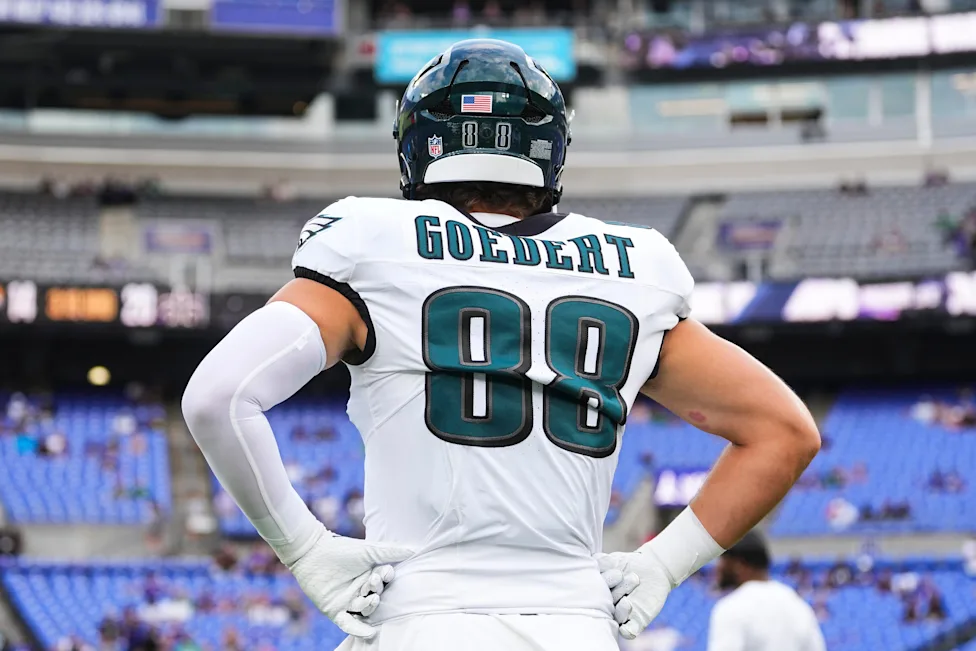
Dallas Goedert — Philadelphia Eagles
Injury: Right MCL sprain
Expected time missed: A few weeks
Re-injury risk: Moderate
Fantasy impact: Zach Ertz and Johnny Mundt would receive additional opportunities.
Analysis:
Goedert is expected to miss multiple weeks with an MCL sprain, and it may take even longer for his fantasy production to completely recover.
The MCL stabilizes the inside of the knee and helps prevent it from collapsing inward. This is important for a tight end who must plant, cut, block, and absorb contact with his foot fixed to the ground. Goedert may be medically cleared before the knee has fully regained its strength, stability, and confidence under game-level stress.
Tight ends in our sample of 14 MCL injuries average 3.7 games missed. They also experience a decline of more than 20% in fantasy production across the first six games after returning. That suggests Goedert could remain less productive well beyond his initial absence.
Goedert is capable of producing big numbers, so even a 20% decline may still make him a better option than most tight ends available on waivers. However, fantasy managers should be prepared for reduced performances after he returns, with his production potentially remaining below baseline until around the middle of
David Njoku — Los Angeles Chargers
Injury: Fibula injury
Expected time missed: At least four games
Re-injury risk: Low upon return
Fantasy impact: Oronde Gadsden II becomes the primary active receiving tight end.
Analysis:
Njoku has been placed on injured reserve with a fibula injury and will miss at least four games. The Chargers have not clarified whether he sustained a fracture, which part of the fibula was injured, or whether the surrounding ankle structures were also involved.
The location matters. The upper fibula serves as an attachment point for muscles and ligaments around the knee, while the lower fibula forms the outside of the ankle. An injury near the ankle would create greater concern for weight-bearing, stability, cutting, and pushing into the ground. Until more information becomes available, it is difficult to project his recovery beyond the minimum four-game absence.
Njoku will need to restore his ankle mobility, lower-leg strength, and explosiveness before returning. Tight ends must repeatedly block with their feet planted before releasing into routes, so any remaining pain or instability could affect both his playing time and receiving production.
Expect Njoku to miss at least four games, with a longer absence possible depending on the exact injury. Oronde Gadsden II is now the primary receiving tight end for the Chargers and should see an immediate increase in routes and targets.
Eli Raridon — New England Patriots
Injury: Thigh injury
Expected time missed: To be determined
Re-injury risk: Moderate
Fantasy impact: Hunter Henry and Cameron Latu would absorb the available tight-end opportunities.
Analysis:
Raridon exited Sunday’s game after a 30-yard reception and was ruled out with a thigh injury. As of this writing, the Patriots have not identified the specific muscle or provided a recovery timeline.
“Thigh injury” is a broad designation that could involve the quadriceps, hamstring, adductors, or another surrounding structure. Each of these injuries carries different mechanical and fantasy implications, so we should avoid assigning a more specific diagnosis without additional information.
Any thigh injury can affect acceleration, route running, and the ability to generate force when blocking. The fact that Raridon was quickly ruled out suggests this was more than a minor episode of soreness, but it does not tell us how much time he will miss.
Raridon’s fantasy relevance is limited, but his absence could create additional opportunities for Hunter Henry and Cameron Latu. His Week 3 status will depend on the diagnosis and whether he can return to practice.
Week 2 created several injuries that fantasy managers will need to manage beyond a simple start-or-sit decision.
Daniels, Dart, Pierce, Goedert, Robinson, and Njoku appear likely to miss meaningful time. Nabers may continue playing without a major decline in production, but his recurrent shoulder instability makes every target and tackle uncomfortable to watch. Williams, Brooks, Dobbins, and Dowdle should eventually return, although their early availability or production may be difficult to trust. Meanwhile, Barkley, Jones, Price, Evans, and Moore currently appear to have avoided the worst-case scenarios.
The biggest lesson is that medical clearance does not always mean fantasy production immediately returns to normal. Goedert and Dowdle have particularly concerning historical trends during their first several games back, while players such as Dobbins and Brooks carry more re-injury risk than expected production decline.
Practice participation, workload, and movement quality will help clarify these situations throughout the week. Continue checking Fantasy Injury Team for updated timelines, replacement options, and data-driven projections as we learn more ahead of Week 3.