
Tom Christ, PT, DPT, OCS • September 19, 2026
Week 2 Fantasy Football Injury Report & Preview | 2026
The most important Week 2 fantasy football injuries, including the latest practice reports, expected availability and primary beneficiaries for Puka Nacua, Joe Burrow, Nico Collins, Brock Bowers and more.
Week 2 Fantasy Football Injury Preview
NFL Week 2 brings several significant injury situations that could affect starting lineups, player workloads and fantasy opportunity. Some players have already been ruled out, while others enter the weekend with questionable or doubtful designations after limited practice participation.
Below are the most fantasy-relevant injuries to monitor, using the final practice reports available ahead of Sunday’s games. Players who have already returned to game action and are practicing without restrictions have been excluded.
Quarterbacks
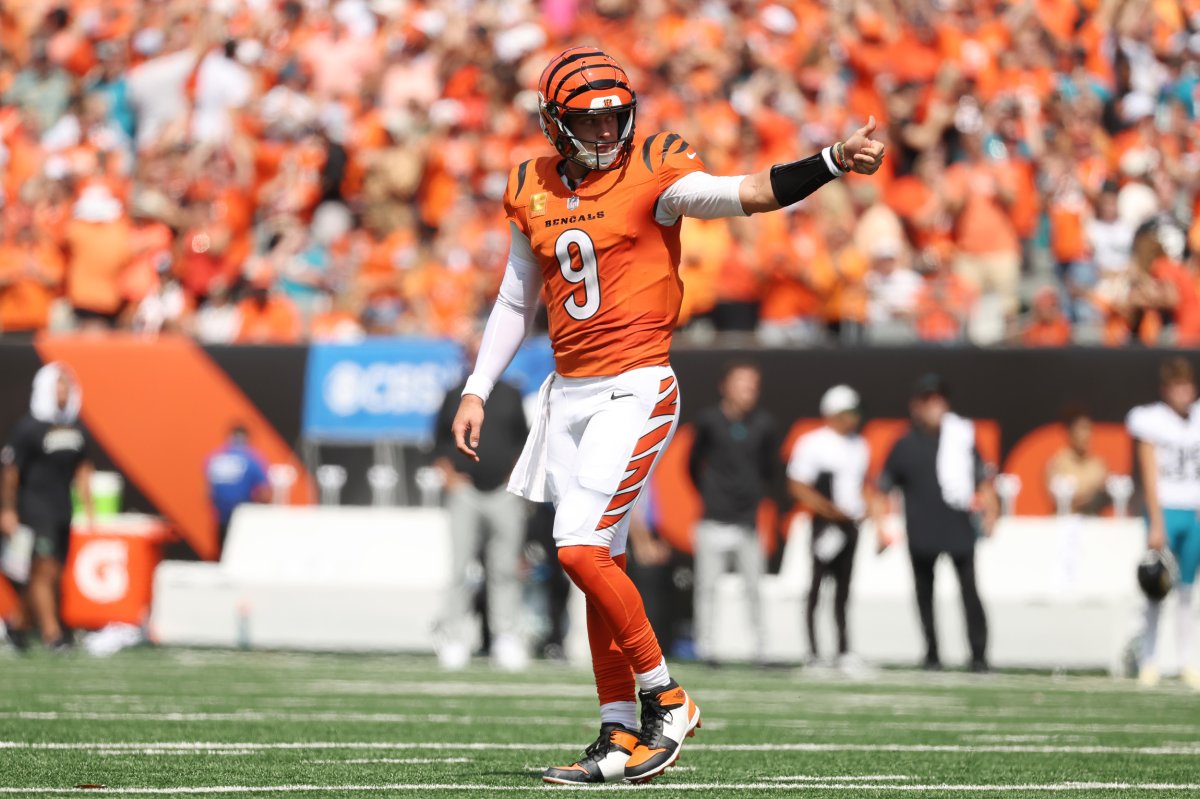
Joe Burrow — Back Tightness
Injury: Back Tightness/Soreness
Practice Status: LP/LP/FP
Expected Time Missed: Expected to start Week 2.
Primary Beneficiary If Time Missed: Joe Flacco
Analysis
It’s not uncommon for an NFL quarterback to experience back tightness or soreness, especially one who gets hit as often as Burrow. When the issue truly is just tightness or soreness, it is often related to fatigue, irritation, or protective muscle guarding rather than a significant structural injury. The muscles surrounding the low back, pelvis, and ribs help control trunk rotation and transfer force during the throwing motion, so increased tightness can make rotation uncomfortable and temporarily alter throwing mechanics.
The good news: back tightness and soreness are usually very manageable. As long as there is no significant underlying injury, such as a fracture, disc injury, or meaningful muscle strain, the symptoms can often be controlled quickly. Burrow has already made it clear that he expects to play, and there is currently little reason to expect a meaningful loss of throwing power or accuracy. Expect Burrow to look fine this week.
Kyler Murray — Concussion
Injury: Concussion
Practice Status: LP/LP/LP
Expected Time Missed: Out Week 2, likely to return in Week 3
Primary Beneficiary If Time Missed: Carson Wentz
Analysis
Murray showed encouraging signs of progress, practicing in a limited capacity throughout the week but ultimately failing to clear the concussion protocol. He will miss Week 2, although he is expected to clear the protocol early next week and has his eyes on returning in Week 3. Once cleared, no lasting fantasy decline is expected solely because of the concussion.
Tua Tagovailoa — Right Oblique Injury
Injury: Right oblique injury
Practice Status: DNP/DNP/DNP
Expected Time Missed: Doubtful for Week 2, potential to return in Week 3
Primary Beneficiary If Time Missed: Cooper Rush
Analysis
Tua does not appear ready to return after injuring his oblique while throwing. The obliques play a major role in the throwing motion, helping rotate and stabilize the torso as force travels from the ground, through the hips and trunk, and finally into the throwing arm. Because throwing repeatedly loads this rotational system, even a relatively minor oblique injury can make it difficult for a quarterback to generate force comfortably.
Oblique injuries usually heal well, so Tua should be back relatively soon. However, he did not practice this week and is listed as doubtful, making a Week 2 return unlikely. Cooper Rush will start this week, but Tua’s absence could eventually open the door for Michael Penix Jr. to reclaim the job once Penix is cleared to return from his knee injury.
Sam Darnold — Right Glute Soft-Tissue Injury
Injury: Right glute tendon injury
Practice Status: DNP/DNP/DNP
Expected Time Missed: Out Week 2; no firm return date.
Primary Beneficiary If Time Missed: Drew Lock
Analysis
This truly is a unique injury for Darnold. The mechanism initially made us concerned about a PCL injury. When the reporting shifted to the hip, and Darnold had difficulty bearing weight, concern grew for a more significant injury around the hip, including a possible fracture, but difficulty weight-bearing alone was not enough to identify a posterior-wall acetabular fracture. Fortunately, the Seahawks have since confirmed that his hip joint is unaffected and he did not sustain a fracture.
This is great news now that the injury has been identified as involving the gluteal soft tissue. The gluteal complex includes the gluteus maximus, medius, and minimus, which are some of the body’s strongest and most important muscles for producing and controlling movement at the hip. For Darnold, a right-handed passer, the right gluteal muscles help generate force from his back leg, rotate and stabilize the pelvis, and transfer that force through the torso. Without proper function, his throwing power and overall mechanics could be diminished.
Darnold will continue to rehab to regain the full strength and power of the gluteal complex. We do not have enough information to know which tendon is involved or how much tissue was damaged. However, the expectation that this will be a short-term injury—and the fact that surgery or injured reserve is not currently planned—makes a complete tendon rupture unlikely. That should allow him to regain his throwing power once the tissue has healed and his strength has returned.
Michael Penix Jr. — Left ACL Reconstruction
Injury: Left ACL tear
Practice Status: Full/Full/Full
Expected Time Missed: Out Week 2, potential to return in Week 3.
Primary Beneficiary If Time Missed: Cooper Rush
Analysis
Penix indicated this week that his knee surgery involved more than an isolated ACL reconstruction, although he did not elaborate on what else was repaired. This helps explain why he can look close to playing while still not being cleared for game action. We do not know which additional structure was involved, but repairs to the meniscus, collateral ligaments, cartilage, or other tissue can add protection requirements and potentially extend the rehabilitation timeline. Penix has said he is “close” to feeling ready, but he still has physical and technical benchmarks to meet.
The mental hurdle is also a gigantic part of the postoperative return-to-sport process that is often overlooked and underappreciated. Penix has now undergone three ACL surgeries during his lifetime, and each recovery carries its own mental weight. That does not necessarily mean confidence is the reason he has not returned, but trusting the reconstructed knee while reacting to pressure and absorbing contact is an important final step.
I am hopeful Penix regains the confidence needed to play soon, and when he does, he should have an opportunity to reclaim the starting role. Historically, quarterbacks have struggled during their first game back after ACL reconstruction, but outside that initial return game, fantasy production has generally returned to baseline.
Running Backs
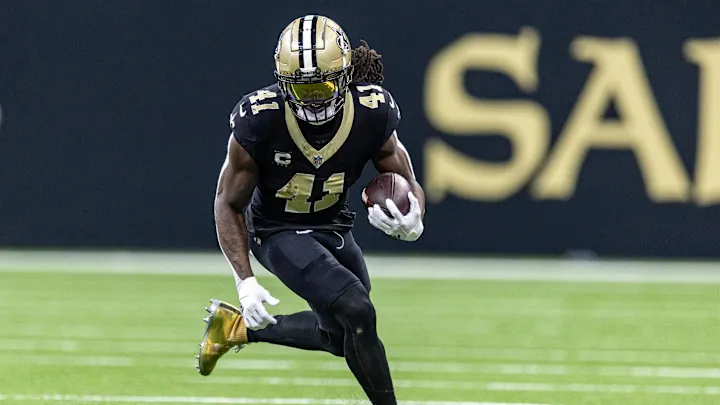
Alvin Kamara — MCL Sprain
Injury: MCL Injury
Practice Status: Full/Full/Full
Expected Time Missed: Expected to play Week 2.
Primary Beneficiary If Time Missed: Travis Etienne Jr.
Analysis
Kamara will return this week after missing substantial time with an MCL sprain. He is no stranger to MCL sprains or lower-body injuries in general, but he practiced fully on Friday, carries no game designation, and says he has “no limitations” and is moving well.
The MCL helps stabilize the knee against collapsing inward into a position called valgus, which is especially important when a ball carrier plants and changes direction. Fortunately, the MCL has a relatively good blood supply and often heals well without surgery. However, running backs in our historical data have struggled during their first four games after an MCL injury, averaging a greater than 20% decline in fantasy production before returning to baseline.
Kamara is expected to receive a decent workload, and his lack of limitations is encouraging. However, the historical trends suggest that his first game back may not be his most productive—especially with Travis Etienne also involved in the Saints’ backfield.
D’Andre Swift — Ankle and Knee Injuries
Injury: Ankle and knee injuries
Practice Status: LP/LP/Full
Expected Time Missed: Expected to play Week 2.
Primary Beneficiary If Time Missed: Kyle Monangai
Analysis
Swift was limited early this week with nonspecific ankle and knee issues but upgraded to a full participant on Friday. The vague injury designations and steady improvement raise the possibility that this was more postgame soreness after a heavy workload than a true injury, although that remains unclear. Either way, Swift has frequently carried limited practice designations during the week without them affecting his availability or performance.
More significant ankle injuries can reduce range of motion, force production, and stability when a ball carrier plants or changes direction, but Swift’s progression to a full practice suggests that is not a major concern here. In our historical data, ball carriers average almost no change in fantasy production after ankle injuries. Swift should be locked into lineups this week.
TreVeyon Henderson — Right Ankle Injury
Injury: Ankle injury
Practice Status: Full/Full/Full
Expected Time Missed: On track to return Week 2.
Primary Beneficiary If Time Missed: Rhamondre Stevenson
Analysis
Henderson will make his 2026 debut this week after missing time with an ankle injury. An ankle injury that costs a player multiple weeks may involve some disruption of the passive stability provided by the ankle ligaments, which can contribute to lingering instability. Time to rehab helps restore strength, mobility, and proprioception, but the risk of recurrence can remain elevated after returning to play.
Ankle injuries can affect a ball carrier’s ability to plant and change direction quickly, but fortunately, ball carriers in our historical data average only about a 2.5% decline in fantasy production after returning.
Henderson has intriguing appeal as an RB2 or flex in Week 2.
RJ Harvey — Hamstring Injury
Injury: Hamstring injury
Practice Status: DNP/LP/LP
Expected Time Missed: Questionable for Week 2.
Primary Beneficiary If Time Missed: JK Dobbins, Jonah Coleman
Analysis
Harvey sat out the first practice of the week and was limited in the remaining practices due to a hamstring injury. Hamstring injuries can affect top-end speed and acceleration, with the greatest strain typically occurring during high-speed running.
Running backs often do not reach top speed because of the shorter distances they usually travel unless they break a long play. However, Harvey’s role in the passing game can require him to run longer routes and cover more space, potentially placing greater strain on the hamstring.
Hamstring strains have one of the highest recurrence rates among muscle injuries, we all know this by now. The good news is that running backs in our historical data average no decline in fantasy production after returning from a hamstring injury. However, Denver may choose to reduce Harvey’s workload this week to protect the hamstring and limit his recurrence risk.
Wide Receivers
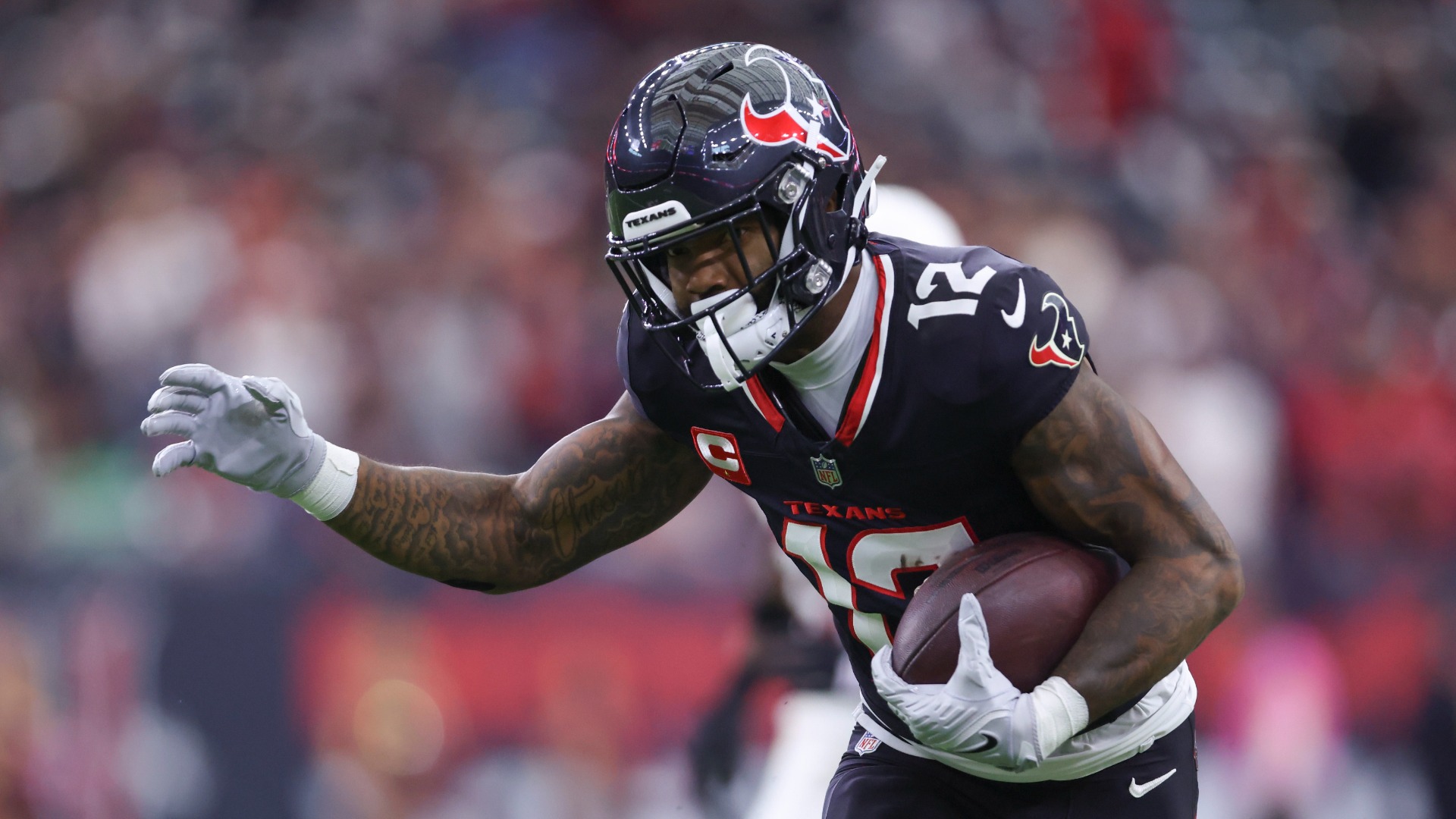
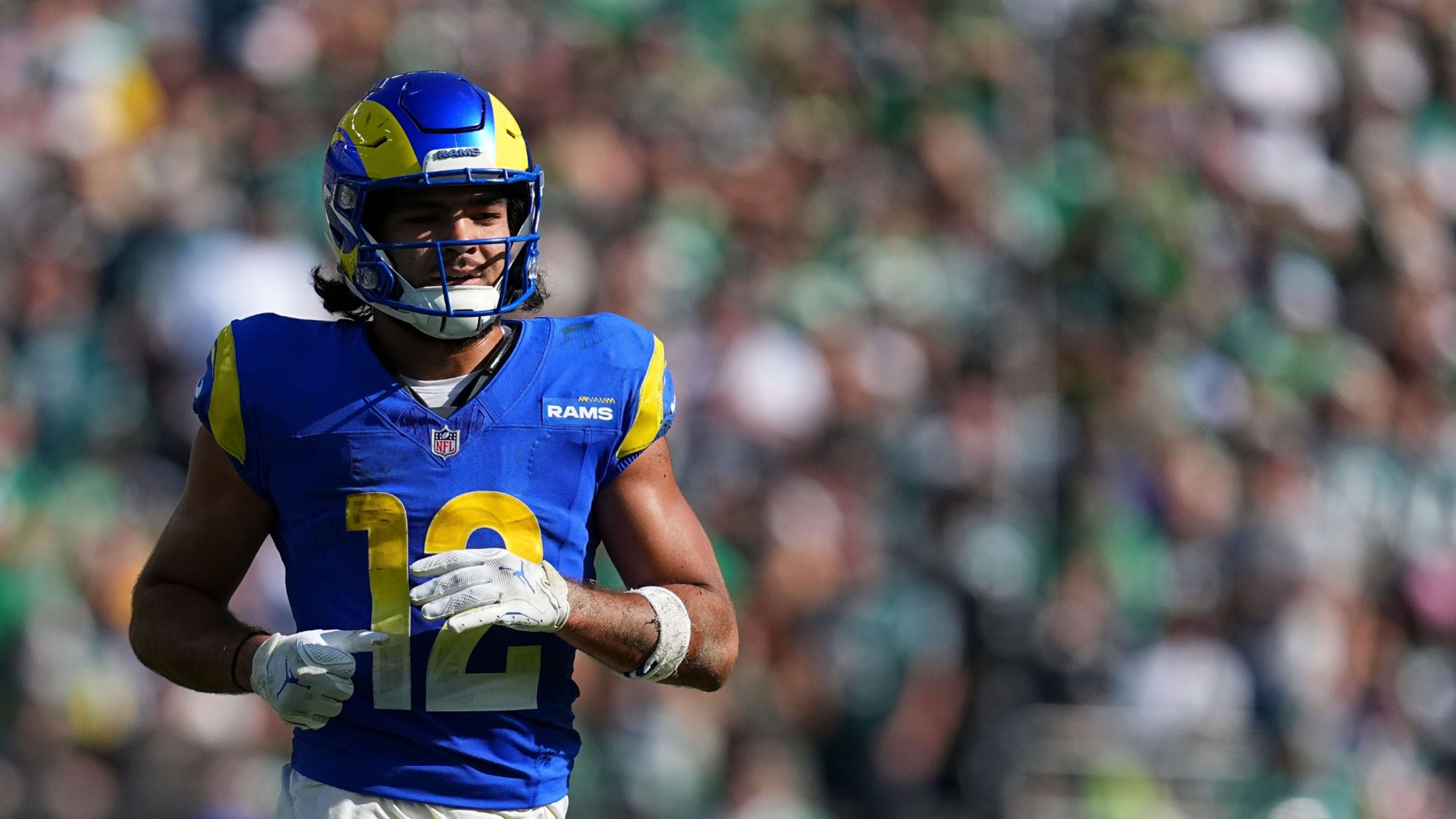
Puka Nacua — Hip Injury
Injury: Hip injury
Practice Status: FP/DNP/Pending
Expected Time Missed: Week 2 availability uncertain.
Primary Beneficiary If Time Missed: Davante Adams
Analysis
This one is interesting. Puka dealt with a psoas injury during training camp, which is classified as a hip injury. As of this writing, we do not know whether Puka aggravated the same injury during practice or if this is a completely different issue.
Any aggravation of a previous injury is less than ideal and can restart or extend the healing timeline. A new injury would require an entirely new analysis of the fantasy implications. For now, we are in wait-and-see mode, but I’ll provide updates and analysis on X (@FantasyInjuryT) as more information becomes available.
The good news is that hip injuries, when evaluated as an aggregate, produce only about a 6% decline in fantasy points among receivers in our historical data. If Puka can play, he should still be capable of producing at close to his usual level.
Nico Collins — Hamstring Injury
Injury: Hamstring injury
Practice Status: LP/DNP/DNP
Expected Time Missed: Out Week 2. Average time missed is 1.7 games.
Primary Beneficiary If Time Missed: Kayshon Boutte
Analysis
Collins injured his hamstring during Wednesday’s practice and will miss Week 2. He is no stranger to the injury report, having missed at least two games in every season of his career. His most notable hamstring injury occurred in 2024 and cost him five games, but otherwise, he has dealt with a collection of different injuries.
Collins’ recurrence risk will be elevated after he returns, particularly during the first month. Hamstring injuries can affect acceleration and top-end speed, which matters for a receiver like Collins who regularly stretches the field.
We’ll reevaluate his fantasy outlook once we have more clarity on the severity of the injury and how much time he has to rehab. Early projections suggest a mild decline in production for the first few weeks after his return. Historically, wide receivers average an 8% decline in fantasy production during their first game back before returning to baseline.
Zay Flowers — Hamstring Injury
Injury: Hamstring injury
Practice Status: DNP/DNP/LP
Expected Time Missed: Doubtful for Week 2. Average time missed is 1.7 games.
Primary Beneficiary If Time Missed: Rashod Bateman
Analysis
Flowers aggravated an existing mild hamstring injury during his incredible Week 1 performance. His archetype makes this injury particularly difficult to manage. Flowers is a speed receiver who relies on quick acceleration and top-end speed to win, exactly when the hamstring is placed under the greatest demand.
With this already being an aggravation of an existing injury, I expect Baltimore to be cautious, regardless of how mild it may be. The Ravens will likely reintegrate Flowers into the rotation gradually when he returns, potentially leading to reduced snaps and a cap on his fantasy production for a few weeks before he hits his full stride.
This is a big one to monitor over the coming weeks.
Chris Olave — Hamstring Injury
Injury: Hamstring injury
Practice Status: FP/LP/LP
Expected Time Missed: Questionable for Week 2. Average time missed is 1.7 games.
Primary Beneficiary If Time Missed: DeVaugh Vele
Analysis
Olave appears to be dealing with a mild hamstring injury but was able to practice in a limited capacity on Thursday and Friday. Any hamstring injury carries some risk of aggravation, particularly if a receiver returns before fully regaining his high-speed running capacity. Of course, you are playing Olave if he suits up, but you’ll be holding your breath every time Scott Hanson flips to the Saints game.
Olave remains a must-start, and the average 8% decline in wide-receiver fantasy production following a hamstring injury does not change that mentality. His medical history is far more notable for concussions, and this appears to be his first documented hamstring injury, which is encouraging from a recurrence-risk standpoint.
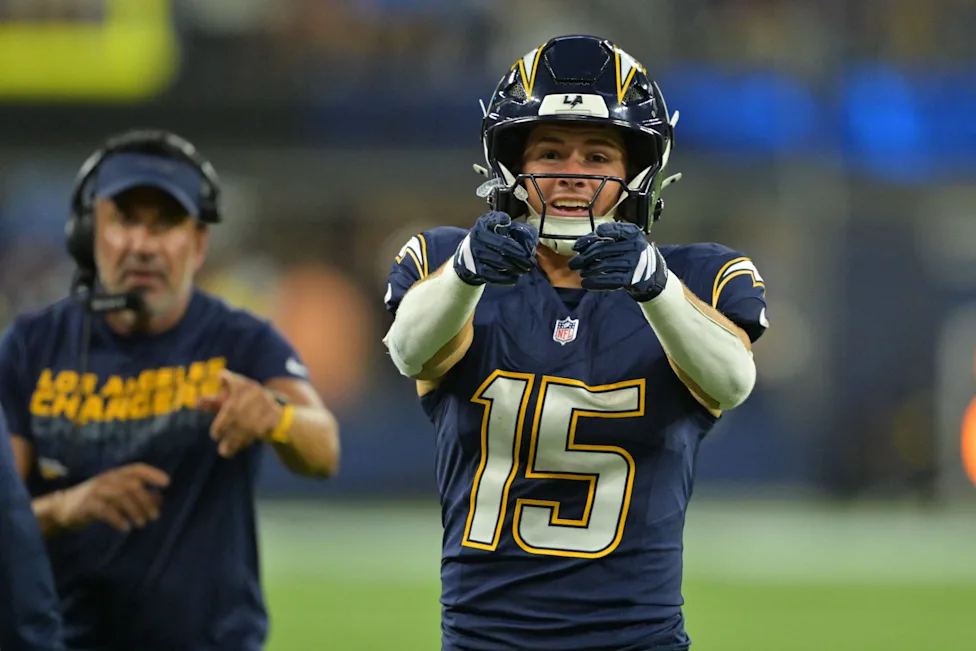
Ladd McConkey — Rib Injury
Injury: Rib injury
Practice Status: DNP/DNP/LP
Expected Time Missed: Questionable for Week 2. Average time missed <1 game.
Primary Beneficiary If Time Missed: Quentin Johnston
Analysis
McConkey was able to return to practice on Friday, an encouraging sign for his availability this week. While there was not much practice video available, we did see him warming up and rotating well through his torso. Following a rib injury, pain commonly limits trunk rotation, overhead reaching, deep breathing, and tolerance for contact. I did not see any footage of him reaching overhead, but his rotational movement looked encouraging.
Assuming this is a stable rib injury and his mechanics remain intact, playing becomes a matter of pain tolerance and contact management. McConkey should be capable of playing well if he can suit up. Receiver production in our historical data overall is unchanged following rib injuries, so if he plays, he should be started. However, it's worth noting many receivers do struggle in game one, and there are a few outliers that inflate the data.
Cooper Kupp — Back Injury
Injury: Back injury
Practice Status: LP/Full/Full
Expected Time Missed: Expected to play Week 2.
Primary Beneficiary If Time Missed: Rashid Shaheed
Analysis
Kupp was limited on Wednesday with a back injury but upgraded to a full participant on Thursday and carries no injury designation into Week 2. That quick progression is encouraging and suggests the issue is unlikely to meaningfully restrict him this week. (Seahawks injury update)
Back injuries can interfere with a receiver’s ability to rotate, accelerate, and reach outside his frame, but a full practice indicates Kupp could perform those movements well enough to handle his normal workload. The back is not the primary concern for his fantasy outlook this week. However, Seattle’s quarterback situation and Kupp’s modest Week 1 usage make him more of a flex option than a confident fantasy starter.
Michael Pittman Jr. — Foot Injury
Injury: Foot injury
Practice Status: LP/DNP/DNP
Expected Time Missed: Questionable for Week 2. Average time missed is 1.4 games.
Primary Beneficiary If Time Missed: Germie Bernard
Analysis
Pittman is questionable with a foot injury after missing practice on both Thursday and Friday. Consecutive missed practices late in the week are concerning, particularly when the specific structure and severity of the injury have not been reported. (Steelers final injury report)
The foot must tolerate substantial force when a receiver accelerates, plants, and breaks out of routes. Even if Pittman is active, pain or reduced force production could affect his ability to separate and create yards after the catch.
Our historical data is particularly concerning for wide receivers returning from foot injuries. Across 27 injury episodes, receivers averaged a 45% decline in fantasy points and a 19% decline in snap percentage during their first game back. Production remained down by 26% in Game 2 and did not return to baseline until approximately Games 5–6.
Pittman will need to be monitored through the inactive announcements. If he plays, the historical trends and his missed practices make him a risky flex option rather than an automatic start.
Tight Ends
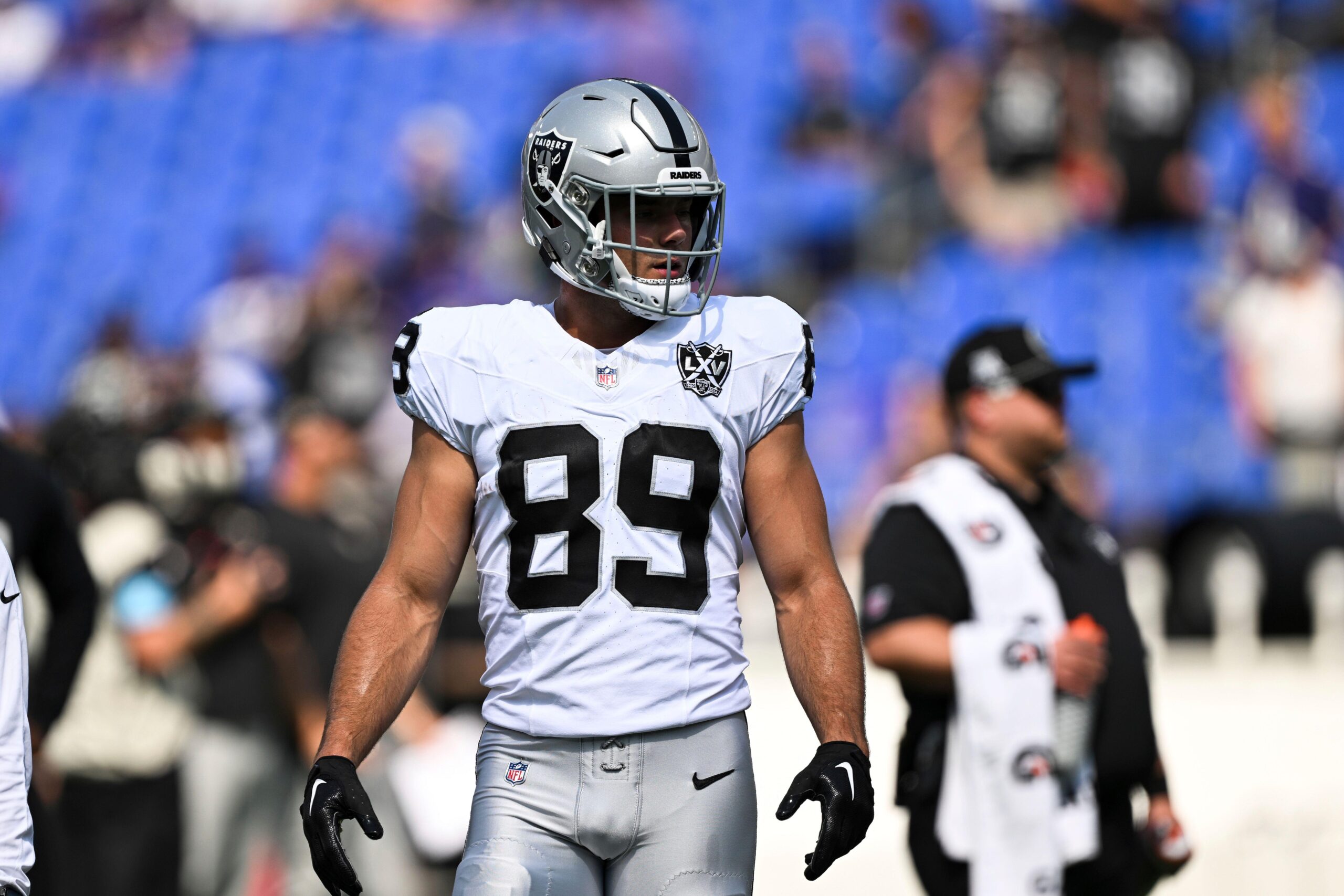
Brock Bowers — Meniscus Injury
Injury: Meniscus trim
Practice Status: DNP/DNP/LP
Expected Time Missed: Doubtful for Week 2. Average time missed is 4.7 games, but Bowers is likely to miss less.
Primary Beneficiary If Time Missed: Michael Mayer
Analysis
Bowers does not appear ready to return just yet, but it sounds like next week is a legitimate possibility. A meniscus trim, or partial meniscectomy, does not require the remaining meniscus to heal like a repair would. The primary challenges are allowing the incisions to heal, resolving joint swelling and stiffness, and restoring quadriceps strength. In my clinical experience, this typically takes four to six weeks, although an elite athlete with around-the-clock access to rehabilitation may progress more quickly.
The sample size for pass catchers returning from a meniscus trim is too small to draw meaningful conclusions about fantasy production. What we should consider is that Bowers is a dominant athlete and, whenever he returns to game action, he should be started in all formats.
George Kittle — Right Achilles Repair
Injury: Achilles tear
Practice Status: LP/LP/Full
Expected Time Missed: Available Week 2.
Primary Beneficiary If Time Missed: Luke Farrell
Analysis
Kittle made his return in Week 1 after an Achilles tear, but the historical data suggests fantasy managers may need to remain patient. Tight ends average a 75% decline in fantasy production in each of their first two games after returning, along with a 41% decline in snap percentage in Game 1 and a 31% decline in Game 2. Production remains down substantially in Game 3 before returning to baseline in Game 4.
The outlook becomes more encouraging around Games 4–6. Tight ends in our data returned to baseline in Game 4 and averaged only a 10% decline across Games 5–6. This suggests Kittle may not become a truly reliable weekly option until approximately his fourth game back, although his talent gives him the potential to beat those averages.
The sample includes only eight tight ends, so these numbers should guide expectations rather than serve as a definitive timeline. Kittle remains a difficult player to bench at a thin position, but reduced snaps and inconsistent production should be expected early. If his workload progresses normally, Games 4–6 are when fantasy managers can reasonably expect him to become dependable again.
Chigoziem Okonkwo — Hamstring Injury
Injury: Hamstring injury
Practice Status: DNP/DNP/DNP
Expected Time Missed: Out Week 2. Average time missed is 3.1 games.
Primary Beneficiary If Time Missed: Ben Sinnott
Analysis
Okonkwo has been ruled out for Week 2 with a groin injury. Groin injuries can affect acceleration, lateral movement, and the ability to generate force while changing direction. Those demands are especially important for a tight end who must transition between running routes and engaging defenders as a blocker. (Commanders final injury report)
The decision to rule Okonkwo out gives him additional time to restore strength and high-speed capacity rather than attempting to play through the injury. His fantasy outlook will depend on how quickly he returns to practice next week and whether he can progress without a setback. Ben Sinnott should receive more opportunities in the passing game while Okonkwo is unavailable.
Conclusion
Week 2 features several high-impact injury situations, particularly at wide receiver. Nico Collins has been ruled out, while Zay Flowers enters the weekend doubtful. Puka Nacua’s hip injury is another major situation to monitor as the Rams complete their shifted practice schedule.
At quarterback, Kyler Murray and Sam Darnold have been ruled out, while Tua Tagovailoa is doubtful after missing the entire practice week. Joe Burrow’s progression to full participation Friday is more encouraging.
Fantasy managers should continue monitoring final game designations, pregame reports, and inactive lists before locking in their Week 2 lineups.