
Tom Christ, PT, DPT, OCS • August 17, 2026
4 Tight Ends With the Most Injury Risk Factors in 2026 Fantasy Football
Four fantasy-relevant tight ends enter 2026 with elevated injury risk for very different reasons. We break down Tucker Kraft, George Kittle, Dallas Goedert and Dalton Kincaid, including the age, injury history, recovery concerns and recurrence risk fantasy managers should understand before drafting.
4 Tight Ends With the Most Injury Risk Factors in 2026 Fantasy Football
Tight end is already a difficult position to navigate in fantasy football, and this year there are several high-end options carrying meaningful injury risk. That does not mean these players are guaranteed to get hurt, but age, prior injuries, surgical history, recurrence patterns, and the physical demands of the position can all increase the likelihood of missed time. Below are four tight ends who I believe carry more risk than most players being drafted around them, along with the specific reasons why each profile concerns me entering 2026.
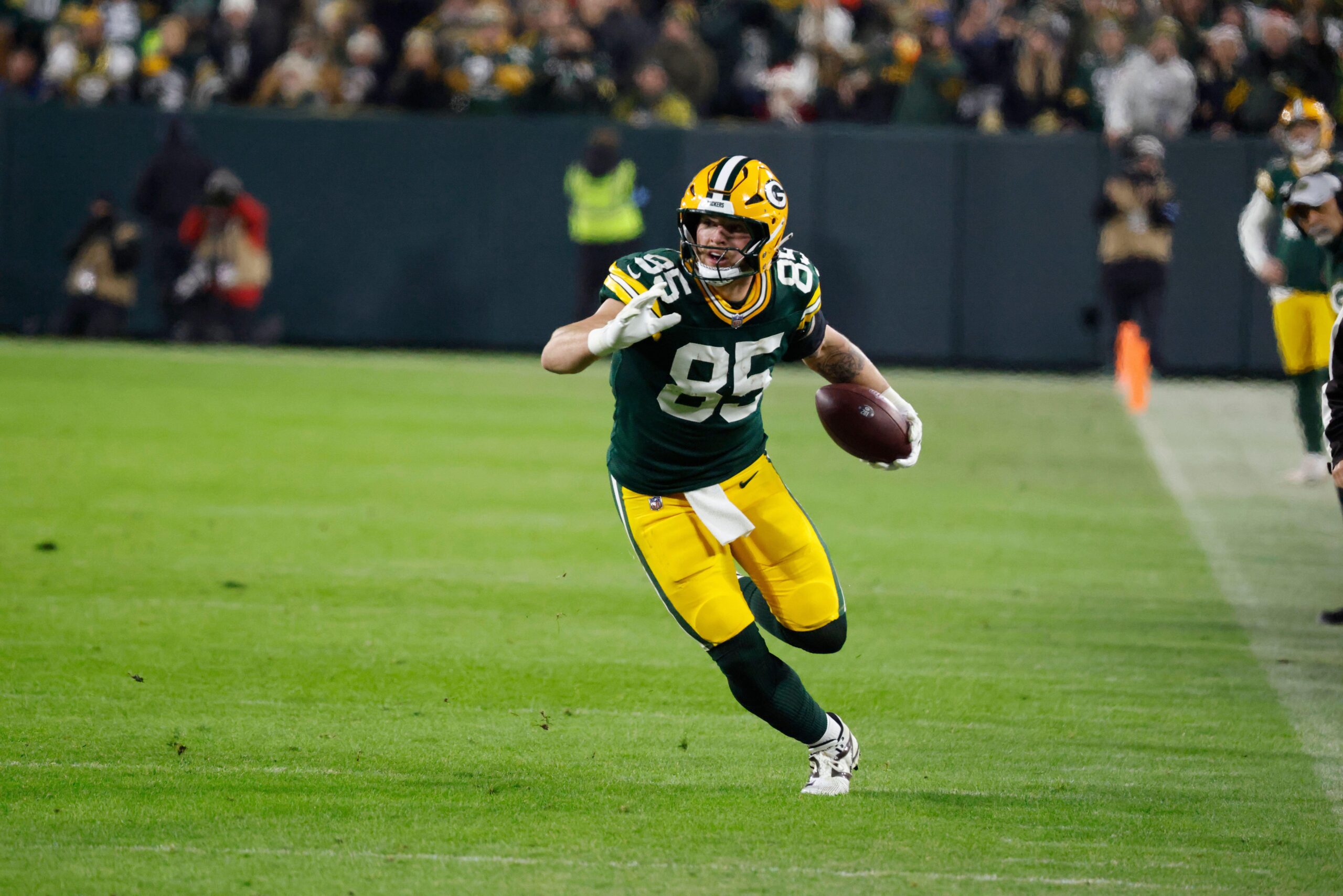
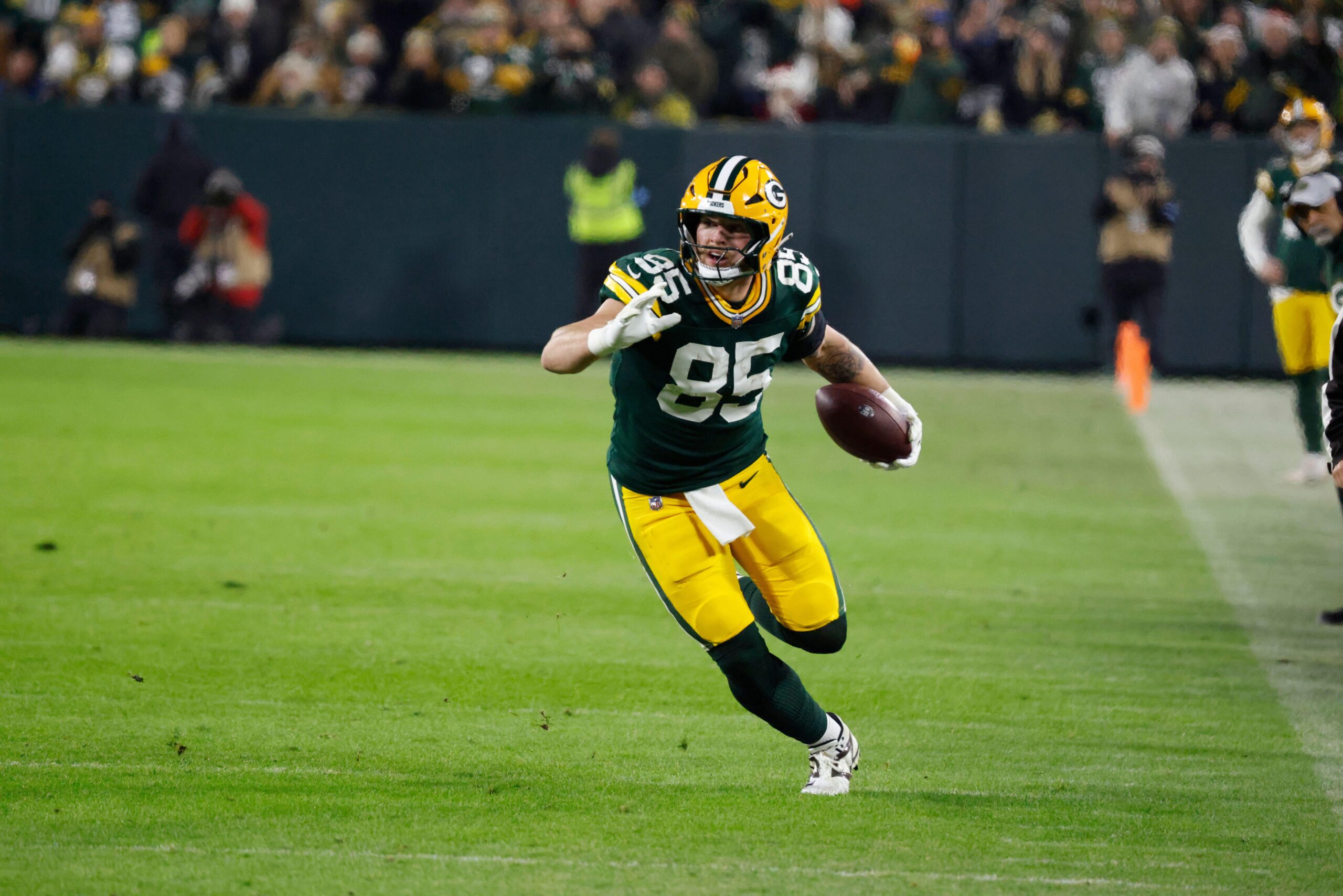
Tucker Kraft: ADP TE5
Kraft was in the middle of a breakout season before tearing his ACL in Week 9, along with damage to the LCL and meniscus. His recovery has progressed well, but entering 2026, less than 10 months removed from ACL reconstruction still gives him more risk than most tight ends in his draft range.
Age
Kraft’s youth works heavily in his favor. Younger players generally recover more efficiently, giving him a strong chance of eventually returning to his pre-injury athletic level.
Injury History
Kraft underwent ACL reconstruction in mid-November. Reports suggest the LCL healed without surgery and the damaged portion of the meniscus was trimmed rather than repaired, making his rehabilitation less complicated than a true multi-ligament reconstruction.
He has already returned to 11-on-11 work and reportedly reached 21.5 mph in straight-line running, both encouraging signs. However, cutting, deceleration and reactive movement are typically more difficult to restore than straight-line speed after ACL reconstruction.
The reconstructed knee also carries elevated risk for graft re-tear, an ACL tear in the opposite knee and secondary hamstring or quadriceps injuries, particularly during the initial return-to-play period.
Workload
Tight ends may be affected less by ACL reconstruction than running backs or wide receivers because the position relies more on size, strength and finding space than elite lateral agility. Still, expecting Kraft to immediately resume the breakout trajectory he was on before the injury may be overly optimistic.
Beneficiary if time missed
Josh Whyle would currently be the most likely beneficiary, especially with Luke Musgrave also dealing with a neck injury. Whyle has already received increased opportunities when Kraft has been unavailable and could take on a larger receiving role if Kraft misses time.
Bottom line: Kraft’s recovery looks very encouraging, but he will begin the season less than 10 months removed from ACL reconstruction. A gradual return to full explosiveness should be expected, while the elevated re-injury risk keeps him in the high-risk category for 2026. Tucker Kraft's entire injury risk profile can be found here.
George Kittle: ADP TE9
Kittle is attempting an unusually fast return from an Achilles tear suffered in the Wild Card Round. The location of the injury gives him a more favorable recovery outlook than a typical Achilles rupture. Still, his age and extensive lower-body injury history make him one of the riskiest tight ends being drafted in 2026.
Age
Kittle enters the season at 32 years old. Regaining calf strength, power, and explosiveness after an Achilles tear becomes more difficult with age, which is especially relevant for a player whose athleticism has always been such a major part of his advantage.
Injury History
Kittle tore his Achilles at the proximal musculotendinous junction, where the calf transitions into the Achilles tendon. This is a rare location that has a richer blood supply than the midsubstance portion of the tendon and may allow for faster healing.
His recovery has progressed extremely well, but there can still be lasting deficits in calf strength and explosiveness after Achilles repair. Kittle also has an extensive lower-body history that includes five hamstring strains, three groin strains and several other injuries.
Workload
Kittle’s athleticism has always helped him separate, create yards after the catch and dominate as a blocker. Even if some explosiveness is lost, his size, hands and red-zone ability should allow him to remain productive. The question is whether he can still provide the same difference-making upside that previously separated him from other tight ends.
Beneficiary if time missed
Jake Tonges would likely see the biggest increase in receiving opportunities. Tonges already produced when Kittle was unavailable last season and should remain involved in San Francisco’s tight end rotation.
Bottom line: Kittle’s rare Achilles injury location makes his recovery more encouraging than a typical rupture, but he is still 32 years old with an extensive lower-body injury history and uncertainty surrounding the return of his explosiveness. At TE9, there is not enough of a discount for me to take on that risk. George Kittle's entire injury risk profile can be found here.
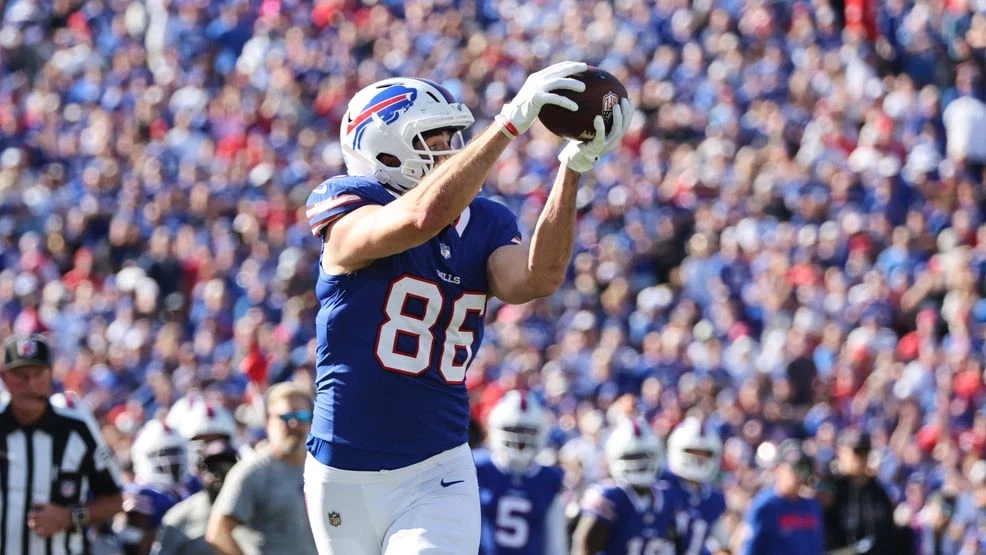
Dalton Kincaid: ADP TE11
Kincaid remains a talented pass catcher, but recurring trouble with his PCL has interrupted his development and creates more long-term risk than most tight ends being drafted around him.
Age
Kincaid remains young enough that age is not a concern. His youth should help with recovery and gives him a better chance to compensate for the underlying knee instability through strength and neuromuscular training.
Injury History
Kincaid initially injured the PCL in his knee in Week 10 of 2024, and symptoms persisted into 2025 despite a full offseason of rehabilitation.
Most players recover well from isolated PCL sprains, with roughly 91% returning to their previous level of play. The concern is that a stretched PCL does not necessarily regain its original passive stability. Rehab instead relies heavily on quadriceps strength, proprioception and neuromuscular control to stabilize the knee.
Persistent laxity can also increase stress on the meniscus and cartilage, while Kincaid has dealt with several additional muscle injuries over the past two seasons.
Workload
Playing tight end repeatedly places the knee in loaded, flexed positions while blocking, where the PCL contributes to stability. It is reasonable to wonder whether the knee has played a role in Buffalo limiting Kincaid from becoming a true every-down tight end.
Another offseason of strengthening should help, but he still needs to prove the knee can tolerate a full season.
Beneficiary if time missed
Dawson Knox would see the clearest increase in snaps and receiving opportunities. Knox remains directly behind Kincaid in Buffalo’s tight end rotation and has already handled a larger role when Kincaid has been unavailable.
Bottom line: Kincaid should remain productive when healthy, and the PCL injury does not necessarily limit his fantasy ceiling. However, recurring symptoms and continued loss of passive knee stability create meaningful long-term risk. Until he proves the knee can consistently tolerate a full season, he remains in the high-risk category for 2026. Dalton Kincaid's entire injury risk profile can be found here.
Dallas Goedert: ADP TE15
Goedert remains productive when healthy, but durability has become the biggest concern. He has missed time in four straight seasons, and the combination of repeated knee problems, a prior hamstring strain and his age gives him more risk than most tight ends in his range.
Age
Goedert enters the season at 31 years old. Age alone is not enough to make him a major concern, but recovery becomes less efficient as players get older, especially when paired with an accumulating injury history.
Injury History
Goedert has dealt with a shoulder injury, surgically repaired right forearm fracture, hamstring strain and multiple knee injuries over the past four seasons. The fractures and shoulder injury were largely contact-related, but the hamstring and repeated knee problems create more meaningful future risk.
He was substantially healthier in 2025 and still produced 11 receiving touchdowns, showing that the previous injuries have not prevented him from playing at a high level.
Workload
Goedert remains Philadelphia’s clear TE1 and an important part of the passing game, particularly in the red zone. His workload should remain fantasy-friendly, but another season of significant snaps and routes adds exposure for a 31-year-old player who has struggled to stay healthy for full seasons.
Beneficiary if time missed
Grant Calcaterra would likely see the biggest increase in snaps and receiving opportunities. He is currently listed directly behind Goedert on Philadelphia’s depth chart and has experience filling a larger role when Goedert has been unavailable.
Bottom line: Goedert proved in 2025 that he can still produce at a high level, but four consecutive seasons with missed time, repeated knee problems, a prior hamstring strain and his age create an elevated likelihood of more missed games. He remains draftable, but the durability concerns keep him in the high-risk category for 2026. Dallas Goedert's entire injury risk profile can be found here.
Final Thoughts: Tight End Injury Risk in 2026 Fantasy Football
All four of these tight ends can still be productive fantasy options, but each carries risk factors that should be considered before drafting them at their current price. Kraft is less than a year removed from ACL reconstruction, Kittle is attempting an extremely fast return from an Achilles tear at 32 years old, Goedert has accumulated injuries across several consecutive seasons, and Kincaid continues to deal with a PCL that may never regain its original passive stability. None of that guarantees another injury, but it does give each player more risk than many of the tight ends being drafted around them. The goal is not to avoid every player with an injury history; it is to understand what that history means before you are on the clock. The 2026 Fantasy Injury Team Draft Injury Guidegoes much deeper, with injury risk ratings, complete injury histories, risk factors, and analysis on 150+ fantasy-relevant players.