
Tom Christ, PT, DPT, OCS • September 5, 2026
18 Fantasy Football Injuries to Monitor Before the 2026 Season Begins
The 18 most important fantasy football injuries to monitor before the 2026 season, including the latest updates, expected returns, reinjury risks and fantasy outlooks for Patrick Mahomes, Ashton Jeanty, Puka Nacua, Malik Nabers and more.
2026 Fantasy Football Injury Updates: 20 Players to Monitor Before Week 1
The latest injury updates, expected recovery timelines, and fantasy beneficiaries as Week 1 approaches.
Last updated: September 5, 2026
Week 1 is almost here, but several highly drafted fantasy players are still dealing with injuries or working their way back into practice.
This week’s update includes several new injuries, including D’Andre Swift, Rome Odunze, Tee Higgins, and Ja’Marr Chase, along with major names such as Ashton Jeanty, Emeka Egbuka, Malik Nabers, and George Kittle, who are still pushing to be ready for the opener.
The first official Week 1 injury reports will provide much-needed clarity. Full participation in consecutive practices will mean much more than conditioning work or limited individual drills.
For complete injury profiles, historical risk factors, and recovery outlooks for more than 150 players, download the 2026 Fantasy Football Draft Injury Guide.
Quarterbacks
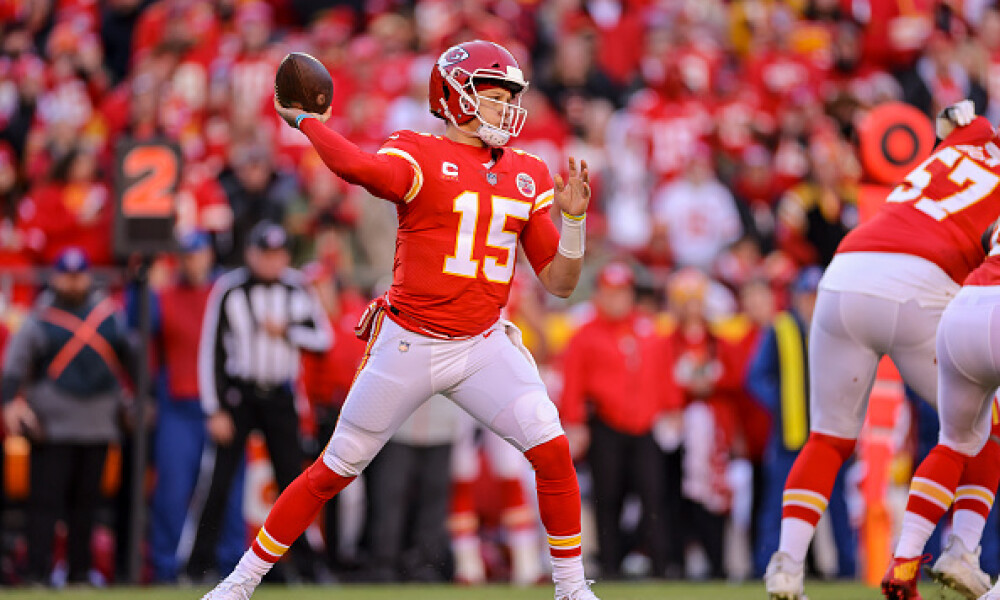
Patrick Mahomes — Left ACL and LCL Reconstruction
Injury
Mahomes tore the ACL and LCL in his left knee on December 14, 2025, and underwent surgery the following day.
Expected Time Missed
Mahomes was fully cleared for training camp and is expected to start Week 1.
Primary Beneficiary If Time Missed
Justin Fields is currently Mahomes' backup and would step in if Mahomes misses time at any point this year. Kenneth Walker would likely receive additional volume if Kansas City is forced to lean more heavily on its running game, although the entire offense would take a significant hit without Mahomes.
Analysis
Defying historical trends for players returning from late-season ACL tears with additional ligament damage, Mahomes is fully on track to play in Week 1. Practice reports and videos show the same Mahomes we are used to, and I expect him to play very close to the elite level quarterback that he is.
The ACL and LCL of his lead leg are stressed as the knee absorbs force and rotation during the follow-through of his throwing motion. Clearly, this has not been an issue for Mahomes in camp. His ability to plant, transfer force, and deliver the ball accurately to every level of the field has looked excellent.
His rushing upside may be limited compared to last season, particularly early in the year, but his mobility should continue to improve as the season progresses. Mahomes’ arm talent and ability to distribute the ball anywhere on the field should be present from Week 1. At his current price, Mahomes is the steal of fantasy drafts this year.
Running Backs
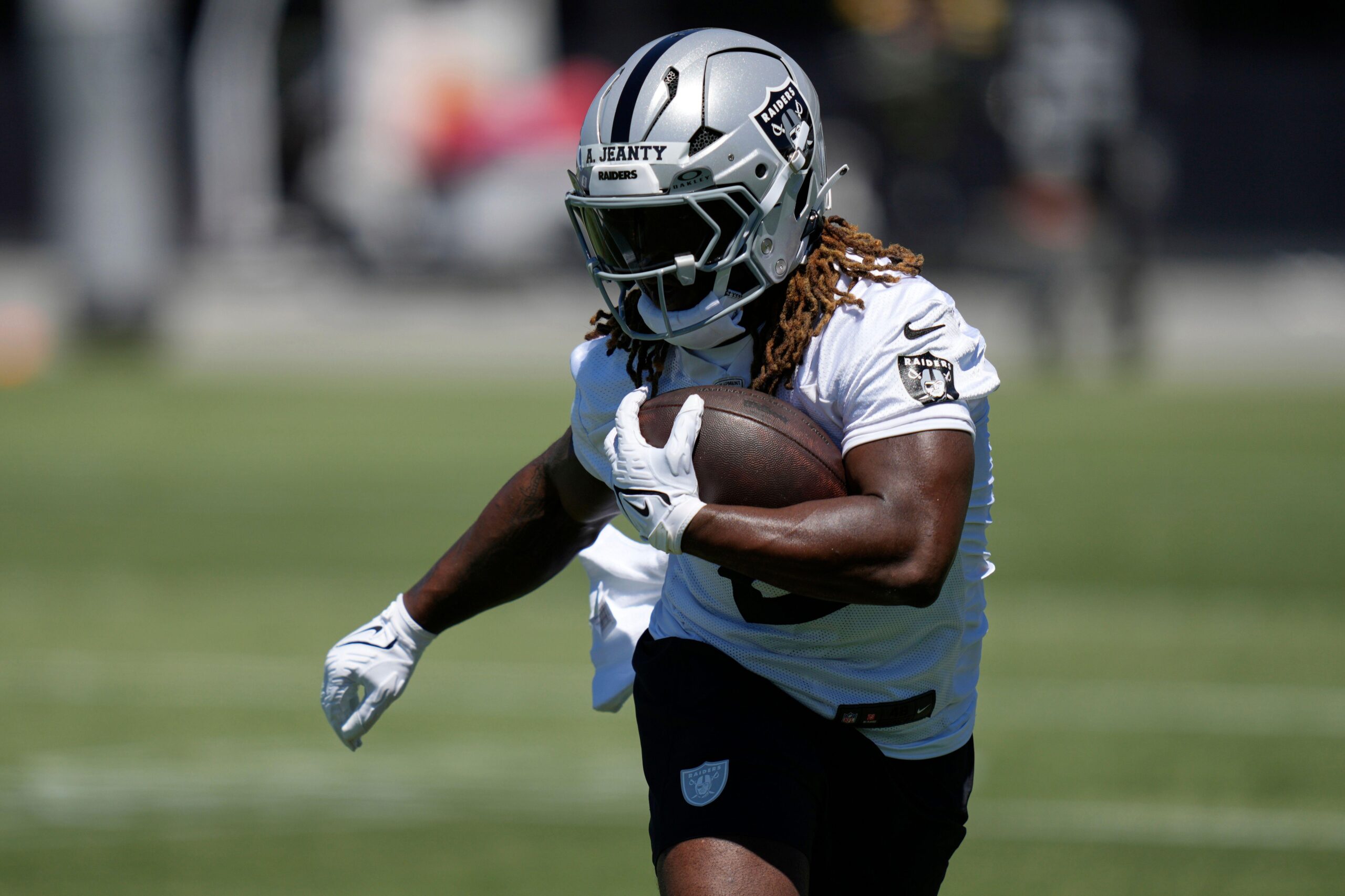
Ashton Jeanty — Right Low-Ankle Sprain
Injury
Jeanty sprained his right ankle after landing awkwardly while diving for a pass during an August 23 practice.
Expected Time Missed
Jeanty has progressed into rehabilitation work on the side, and the Raiders believe he is closer to returning than initially expected. He has a legitimate chance to play Week 1, but he could be limited if he does.
Primary Beneficiary If Time Missed
Mike Washington Jr. has received additional first-team work and would be positioned to lead the Raiders’ backfield if Jeanty is unavailable or limited.
Analysis
Jeanty has been rehabbing his ankle on the side but has not officially practiced since the injury. A lateral, or low, ankle sprain is extremely common in football and can vary significantly in severity. Based on his initial reaction and inability to put weight through the leg, I suspect this was a Grade II–III sprain. That degree of injury would cause true ligament damage and could leave lasting laxity, or reduced stability, in the ankle.
Lateral ankle stability is especially important for a running back when planting, decelerating, and changing direction. The ankle must provide a stable base as the player loads the outside of the foot and redirects force in another direction. If Jeanty is left with any laxity, it could affect his confidence and control while cutting and will certainly elevate his risk for another ankle sprain.
The fantasy production side, however, is likely unchanged by this injury. Historically, running backs experience only a very minimal decline in fantasy points after returning from lateral ankle sprains. The bigger concern is workload. If Jeanty misses Week 1 or the Raiders ease him back into action, Mike Washington Jr. could receive more touches than we expected before the injury.
Long-term, this should not significantly change Jeanty’s fantasy ceiling. The main concern is whether the injury affects his Week 1 availability and creates a larger-than-expected role for Washington early in the season.
Breece Hall — Right-Groin Strain
Injury
Hall sustained a noncontact right-groin strain after catching a pass during an August 17 practice.
Expected Time Missed
Hall has progressed into running and sprinting work on the side. The Jets continue to expect him to be available Week 1, although his first-game workload remains worth monitoring.
Primary Beneficiary If Time Missed
Braelon Allen would be positioned to lead the Jets’ backfield if Hall is unavailable or opens the season with a restricted workload. Isaiah Davis could also receive additional opportunities.
Analysis
Hall remains on track to play after suffering a groin injury in mid-August. The groin muscles contribute to sprinting, cutting, and single-leg stability, but they are not the primary muscles responsible for producing these actions. This helps explain why players can often return to a high level of performance relatively quickly once the pain has resolved and strength has returned.
Historically, groin injuries have no meaningful negative impact on fantasy production after return, so fantasy managers can rest easy knowing Hall should be capable of playing at a high level right away. The Jets may manage his workload in Week 1 after several weeks away from practice, but that would be more related to conditioning and reinjury prevention than a loss of ability.
Reinjury is always a concern with any lower-body muscle strain, and research suggests an approximately 18% recurrence rate for groin injuries. That risk will be highest during his first few weeks back, particularly as he returns to full-speed sprinting and cutting. Still, this injury should not cause fantasy managers to fade Hall or meaningfully change where he is drafted.
D’Andre Swift — Abdominal Injury (Cramp?)
Injury
Swift injured his abdominal area after a goal-line run during a September 3 practice and left the field in significant discomfort. Later reports suggested this was a cramp.
Expected Time Missed
If this was just a cramp, he will be back in no time.
Primary Beneficiary If Time Missed
Kyle Monangai would be the primary beneficiary if his knee allows him to play. If both running backs are unavailable, Roschon Johnson would be positioned for a much larger role.
Analysis
Hopefully, this was just a cramp, in which case it is a complete non-issue. My initial concern, however, was Swift’s history of seven left-sided groin injuries.
But this was reported as an abdominal injury, so why do I care about his groin? Great question. Even though this may turn out to be nothing more than a cramp, the relationship between the groin and abdominal muscles is worth explaining.
Several groin and abdominal muscles share attachments around the pubic bone. They are also interconnected through fascial planes—continuous layers of connective tissue that surround the muscles and help them function together to create and control movement.
During rotational movements, the left groin works with the left internal oblique, right external oblique, and right serratus anterior. Other fascial connections link the groin to the rectus abdominis, or six-pack muscle, as well as the pelvic floor, diaphragm, and transversus abdominis. Together, these structures help transfer force between the lower and upper body while stabilizing the pelvis and trunk.
All that learning just to say: hopefully this truly was a cramp. However, if Swift does deal with an abdominal injury this season, his extensive history of left-groin problems could absolutely be a contributing factor. Repeated groin injuries can alter how force is distributed through the pelvis and core, potentially placing more stress on the connected abdominal tissues.
For now, this is something to monitor, not a reason to panic. If Swift returns to practice without further symptoms, fantasy managers can treat it as a non-issue. If the discomfort lingers or is officially diagnosed as a strain, his Week 1 workload and reinjury risk become much more concerning.
TreVeyon Henderson — Right Low-Ankle Injury
Injury
Henderson injured his right ankle after slipping while making a cut during an August 24 practice.
Expected Time Missed
Henderson has been walking without a noticeable limp but has remained out of practice through September 3. He is still expected to have a chance to play Week 1, but he needs to return to practice before we can feel confident about his availability.
Primary Beneficiary If Time Missed
Rhamondre Stevenson would be positioned to handle a larger percentage of New England’s rushing attempts and passing-down work if Henderson is unavailable or limited.
Analysis
As of this writing, Henderson still has not returned to practice, and the Week 1 alarm bells are close to ringing. Reporting has not made this sound like a severe ankle injury, although his multi-week absence creates at least some concern that this may be more than a very mild sprain. Additionally, New England plays on Wednesday, reducing his time to get ready.
A moderate ankle sprain can cause true ligament damage and leave some residual laxity, increasing the risk of future sprains. Lateral ankle stability is also important when planting, decelerating, and changing direction. If that stability has not fully returned, Henderson could initially be less confident and explosive when cutting.
The good news is that running backs historically experience very little decline in fantasy production after returning from ankle injuries. We will continue monitoring Henderson’s status, but if he returns to practice ahead of Week 1 and handles consecutive sessions without a setback, I would not be concerned about this injury meaningfully affecting his fantasy output.
Jeremiyah Love — Left High-Ankle Sprain
Injury
Love sustained a left high-ankle sprain during Arizona’s August 13 preseason game against Las Vegas.
Expected Time Missed
Love has continued progressing through rehabilitation and has a shot to be ready for week one.
Primary Beneficiary If Time Missed
Tyler Allgeier would be positioned to handle the largest share of Arizona’s backfield work if Love is unavailable or limited.
Analysis
High-ankle sprains can be a problem. They occur when the syndesmotic ligaments that hold the tibia and fibula together are stressed. Depending on the severity, the injury can disrupt the integrity of those ligaments and allow increased gapping between the two bones. In other words, the ankle becomes less stable.
Ankle stability is critical for an athlete to quickly plant and cut. If the syndesmosis is not providing a stable base, it can reduce the precision and power with which the athlete changes direction. Any remaining laxity can also increase the risk of another ankle injury or cause compensations elsewhere in the lower body.
The encouraging news is that Love is very young and will have had approximately one month to rehab before Week 1. Running backs historically average missing 2.5 games after a high-ankle sprain, so he will have had more time to rehab compared to most. Even if he plays, however, it would not be surprising to see Arizona initially manage his workload.
The fascinating—and positive—finding is that running backs historically experience no meaningful decline in fantasy production after returning from high-ankle sprains. Love’s Week 1 status and early workload still need to be monitored, but this injury does not meaningfully change his season-long ceiling. He remains a strong fantasy prospect for 2026.
Kyle Monangai — Right-Knee Hyperextension
Injury
Monangai hyperextended his right knee after becoming tangled with a defender during an August 16 practice.
Expected Time Missed
Monangai’s MRI showed no structural damage, and he has progressed to running on the side. He remains week-to-week and has not returned to team drills, making him a legitimate question mark for Week 1.
Primary Beneficiary If Time Missed
D’Andre Swift would normally be positioned for a larger workload. Roschon Johnson could receive additional touches if Monangai and Swift are limited.
Analysis
Monangai has not returned to practice, but he has progressed to running on the side and reportedly “looked good.” That is encouraging, although running in a controlled setting is still very different from cutting, absorbing contact and participating in full-speed team drills.
A knee hyperextension is not a medical diagnosis—it only describes the mechanism of injury. Common injuries resulting from a hyperextension include a bone bruise or meniscus damage, while the ACL and PCL can also be disrupted. A significant ACL injury would almost certainly have resulted in surgery and a season-ending timeline, so we can reasonably rule that out. The PCL is more difficult to rule out because many PCL injuries are treated without surgery.
Assuming his meniscus and PCL are clean and this is primarily a bone bruise, Monangai should have no problem returning to a high level of play once the pain and swelling resolve. A bone bruise can be very painful, but it should not create a meaningful decline in fantasy production or increase his long-term injury risk.
If there is underlying meniscus damage, the outlook becomes less predictable. Meniscus injuries can continue to present throughout the season in the form of recurring swelling, stiffness and discomfort, particularly as workload and contact increase.
It is unlikely Chicago will ever give us the full details about the involved tissues, so we will have to continue monitoring his progression. Returning to consecutive practices without swelling or a setback would be the most important checkpoint. Until that happens, his Week 1 availability remains uncertain, but this injury should not meaningfully affect his season-long fantasy value if the damage is limited to a bone bruise.
Wide Receivers
Puka Nacua — Psoas Soreness
Injury
Nacua exited an August 11 joint practice with groin discomfort that Sean McVay later identified as soreness involving the psoas.
Expected Time Missed
Nacua has a good chance to play in week 1.
Primary Beneficiary If Time Missed
Davante Adams would become the unquestioned focal point of the Rams’ passing game if Nacua experiences a setback or cannot handle his normal workload.
Analysis
Nacua continues to progress well from the psoas injury that kept him out for much of August. The psoas is a primary hip flexor that helps drive the thigh forward during acceleration and sprinting, making it a critical power muscle for a wide receiver. It also helps control the pelvis as force transfers between the lower and upper body.
Despite its importance, this is not typically a long-term injury and generally responds very well to rehabilitation. Puka has been seen sprinting at high speed and looking comfortable, without any obvious shortening of his stride or other mechanical compensations. His return to practice is another strong indication that the muscle is tolerating football-specific demands.
Any recent soft-tissue injury carries some short-term recurrence risk, but nothing about Puka’s progression currently suggests this will affect his explosiveness, workload, or fantasy production. I expect him to be a full go with no meaningful limitations in Week 1.
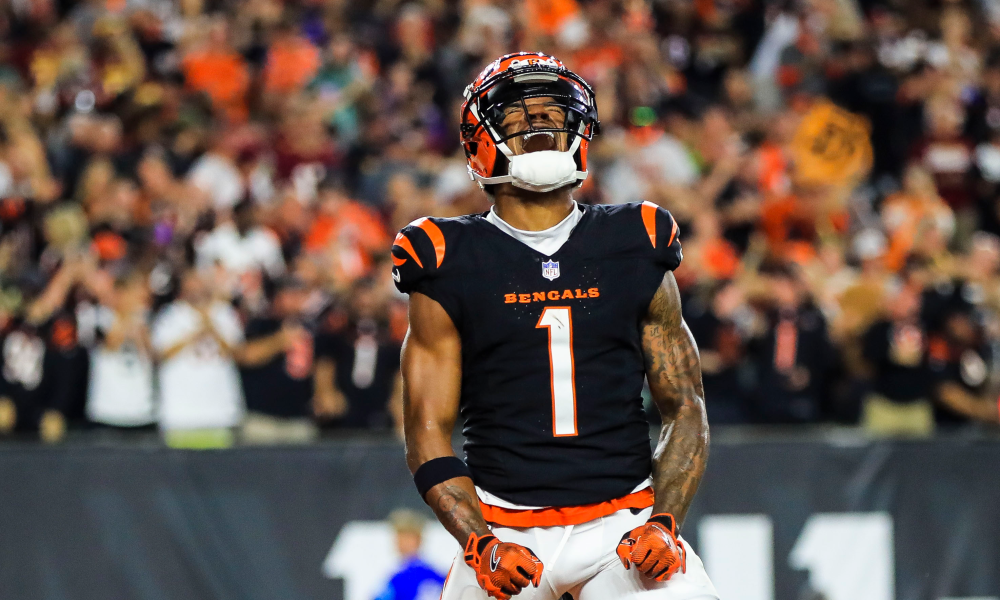
Ja’Marr Chase — Left-Knee Hyperextension
Injury
Chase hyperextended his left knee after landing awkwardly while attempting to catch a deep pass during an August 25 practice.
Expected Time Missed
Chase has been limited during Cincinnati’s ramp-up, but the Bengals expect him to be ready for Week 1. There is currently no indication that he will miss the opener.
Primary Beneficiary If Time Missed
Tee Higgins would become Cincinnati’s clear top receiving option if Chase were unexpectedly unavailable. The Bengals’ other receivers would also receive additional routes and targets.
Analysis
There is essentially no negative reporting surrounding Chase’s knee right now. I’m not surprised he did not practice this week, as knee hyperextension injuries commonly lead to a bone bruise, swelling and temporary discomfort. These symptoms often take approximately 7–14 days to resolve, but once the swelling and pain subside, performance should return to its prior level.
The timeline strongly favors Chase being ready for Week 1. There is currently no indication of meaningful ligament or meniscus damage, and therefore no reason to expect an elevated risk of reinjury or a decline in fantasy production. Assuming he progresses to practice as expected, Chase should be treated as a full go.
Injury
Nabers tore the ACL in his right knee and sustained an associated meniscus injury on September 28, 2025.
Expected Time Missed
Nabers has been running routes and participating in practice, but he has not committed to playing Week 1. He has a chance to play, although a reduced snap count is likely at minimum.
Primary Beneficiary If Time Missed
Malachi Fields and Odell Beckham Jr. would be positioned to receive additional routes and targets if Nabers is unavailable or limited.
Analysis
Nabers has looked excellent throughout his recovery and should return early this season, if not in Week 1. His young age and elite talent profile give him the rare combination needed to succeed during the first season after an ACL tear. It is certainly possible, but history tells us it is extremely difficult.
Wide receivers typically experience a significant decline in fantasy production during their first season back. Medical clearance does not mean the rehabilitation process is finished. Fully restoring strength, power, neuromuscular control and confidence following ACL reconstruction takes considerable time and work. Those limitations can be especially noticeable when a receiver must explosively accelerate, decelerate and change direction.
Nabers will also carry an elevated risk of reinjuring the knee or sustaining a subsequent soft-tissue injury, particularly to the quadriceps or hamstrings. His exceptional talent may make that risk worth accepting, but fantasy managers should not assume an immediate return to his pre-injury ceiling. If he is unable to play in Week 1, I do not expect it will be much longer before we see him back on the field.
Emeka Egbuka — Toe Sprain
Injury
Egbuka sustained a toe sprain after another player rolled into his leg during an August 12 joint practice.
Expected Time Missed
Egbuka has progressed into running, hopping, and change-of-direction work with the training staff but has not returned to full-team practice. He still has a chance to play Week 1, but his status remains questionable.
Primary Beneficiary If Time Missed
Jalen McMillan, Chris Godwin and Ted Hurst would have opportunities to absorb additional routes and targets if Egbuka is unavailable or limited.
Analysis
Egbuka is clearly making progress. Videos emerged this week of him performing single-leg hopping drills that repeatedly stressed the big toe into extension, as well as running routes at partial speed. Although we have not yet seen him work at full speed, I did not observe any mechanical compensations or avoidance of loading through the injured toe. That is very encouraging.
The big toe is critical for sprinting and changing direction because it must extend and remain stable as the athlete pushes into the ground. Without adequate mobility, strength, and stability, compensations are almost impossible to avoid. A receiver may lose acceleration, struggle to plant effectively, and have difficulty getting in and out of routes while the injury remains symptomatic.
Wide receivers do average a temporary decline in fantasy production after big-toe injuries, but their long-term outlook is generally favorable. Egbuka’s progression suggests he is moving in the right direction, although full-speed routes and unrestricted practice will be the final checkpoints. His injury is causing him to slip in drafts, creating a legitimate buy-low opportunity for fantasy managers willing to accept some early-season uncertainty.
Zay Flowers — Left-Quadriceps Injury
Injury
Flowers injured his left quadriceps during an August 8 practice and later missed additional time with what Baltimore described as a lower-body injury.
Expected Time Missed
Flowers returned to practice on September 3 and is expected to reach full participation next week. He is on track to play Week 1.
Primary Beneficiary If Time Missed
Ja’Kobi Lane would be positioned for a larger receiving role if Flowers experiences a setback. Baltimore could also direct additional targets toward its tight ends.
Analysis
This one is a non-issue. A quadriceps contusion is simply a bruise to the muscle. It can be painful and temporarily make running, accelerating and bending the knee difficult, but those limitations should disappear as the bruising resolves. Once he is pain-free and moving normally, his function should be fully restored without any meaningful increase in reinjury risk or expected decline in fantasy production.
Tee Higgins — Heel Contusion
Injury
Higgins developed a heel contusion during the final portion of training camp.
Expected Time Missed
Cincinnati has limited Higgins in practice but continues to describe the injury as minor. He is expected to be ready for Week 1.
Primary Beneficiary If Time Missed
Ja’Marr Chase could command an even larger target share if Higgins is limited. Cincinnati’s secondary receivers would also receive additional opportunities.
Analysis
Heel injuries can go several ways because pain in this area can make it difficult to absorb force, accelerate, and push off while running. However, if this is truly just a contusion, a short period of rest should allow the contusion to heel—pun intended—and he will be fine. Based on the current reporting, I do believe this is simply a bruise rather than a more concerning injury.
The heel injury itself does not meaningfully change my outlook for Higgins. However, his lengthy injury history already had him classified as high risk before this occurred. He is immensely talented and capable of producing whenever he is on the field, but availability matters in fantasy football. This bruise is a minor concern; his overall durability remains the larger one.
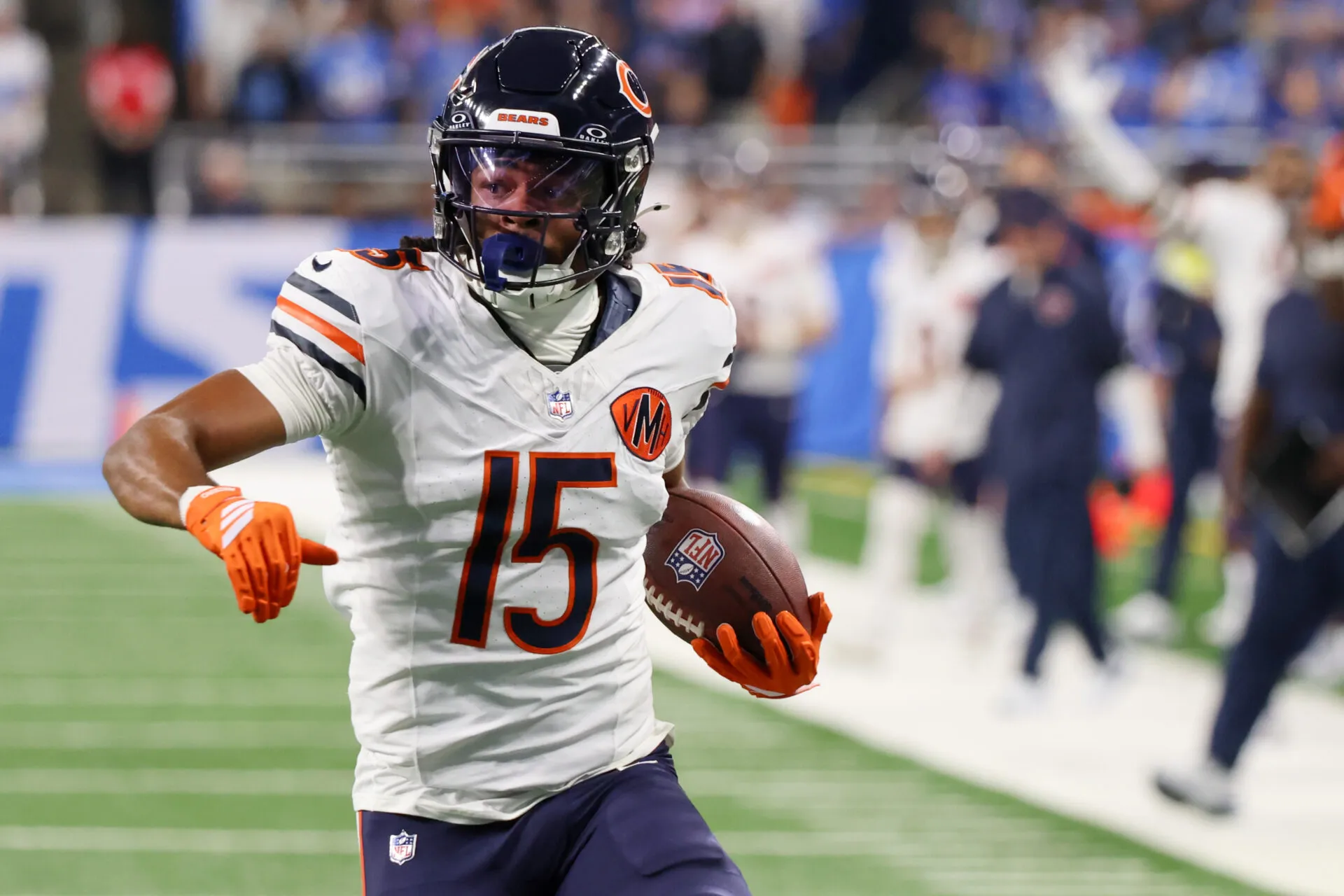
Rome Odunze — Right-Leg Injury
Injury
Odunze injured his right leg during a September 3 practice and was eventually removed by the training staff after initially trying to continue.
Expected Time Missed
He is currently expected to play Week 1, pending his participation next week.
Primary Beneficiary If Time Missed
Luther Burden III would be positioned for additional routes and targets if Odunze is unavailable or limited.
Analysis
Odunze should be fine, and it is encouraging that this is not the same foot he injured last season. That makes this less likely to represent a recurrence or compensation related to the previous injury.
We do not have enough detail yet to provide a meaningful tissue-specific analysis, but nothing in the preliminary reporting suggests a serious issue or extended absence. For now, this is a situation to monitor rather than a reason to adjust his fantasy value.
Mike Evans — Groin Strain
Injury
Evans sustained a groin strain during the latter portion of training camp after previously missing time with a quadriceps injury.
Expected Time Missed
Evans returned to practice this week after missing most of training camp. He is currently expected to play Week 1.
Primary Beneficiary If Time Missed
Christian McCaffrey and George Kittle would be positioned to absorb additional targets if Evans is unavailable. San Francisco’s other receivers would also see increased opportunities.
Analysis
Evans is always dealing with something, and at age 33, that is unlikely to improve. Another lower-body muscle injury during training camp adds to an already lengthy injury history and gives us plenty of reason to question how many games we will actually get from him this season.
The groin muscles contribute to sprinting and provide single-leg stability when a receiver decelerates, plants and changes direction. They are especially important when cutting across the field or pushing out of lateral route breaks. If the injury remains symptomatic, Evans could temporarily struggle to separate or get in and out of routes as efficiently as usual.
Groin injuries generally do not cause a major decline in fantasy production once the athlete returns, so I am not overly concerned about Evans’ performance when healthy. The bigger issue is that another lower-body muscle injury adds to his risk of missing time or suffering another injury as the season progresses. Evans remains immensely talented, but availability is an increasingly important part of the equation.
Luther Burden III — Left-Groin Strain
Injury
Burden sustained a left-groin strain after becoming tangled with a defender during an August 8 practice.
Expected Time Missed
Burden returned to individual drills on August 26 and has continued working his way back into practice. Chicago expects him to be available Week 1, but he may not immediately handle a full workload.
Primary Beneficiary If Time Missed
Rome Odunze would be positioned for additional routes and targets if Burden is unavailable or limited. Chicago could also lean more heavily on its tight ends.
Analysis
Burden remains on track to play in Week 1 following his mid-August groin injury. Like Evans above, the groin muscles help a receiver sprint, stabilize on one leg, decelerate, and push out of route breaks. Any lingering symptoms could temporarily affect his acceleration or ability to change direction, but groin injuries generally have minimal, if any, impact on fantasy production once a player returns.
Unlike Evans, Burden is much younger and has no prior history of groin injuries. That combination should help him return to 100% quickly and lowers the likelihood of this becoming a recurring problem. His reinjury risk will remain elevated compared to his pre-injury baseline, as it would for any recent muscle injury, but there is currently no reason to expect a meaningful limitation in Week 1 or beyond.
Alec Pierce — Left Ankle and Heel Surgery
Injury
Pierce underwent surgery on his left ankle in late March after dealing with ankle and heel pain throughout the 2025 season.
Expected Time Missed
Pierce has progressed back toward practice after a slow recovery and has a chance to play Week 1. He will likely be eased into action during his first few games.
Primary Beneficiary If Time Missed
Josh Downs and Keenan Allen would be positioned to receive additional targets if Pierce is unavailable or limited. Indianapolis could also lean more heavily on Tyler Warren.
Analysis
Pierce finally returned to full practice, and I will admit that his running gait looks significantly better than his walking gait. That is encouraging, but it does not eliminate my concerns about the ankle.
We never received the full story regarding Pierce’s surgery. The team characterized it as a minor cleanup, but his lengthy recovery suggests the procedure may have been more involved. A cartilage or ligament repair—or potentially a microfracture procedure—would better explain the extended absence. These procedures can leave residual stiffness, weakness and mechanical compensations while also raising concern about the long-term integrity of the ankle.
It remains unclear how effectively Pierce will play following his return. His fantasy value is heavily dependent on his ability to function as a deep threat, and even subtle losses in ankle mobility, force production or push-off power could affect his acceleration and top-end speed. Returning to full practice is an important step, but Pierce remains difficult to trust this season until we see him consistently move and produce at game speed.
Tight Ends
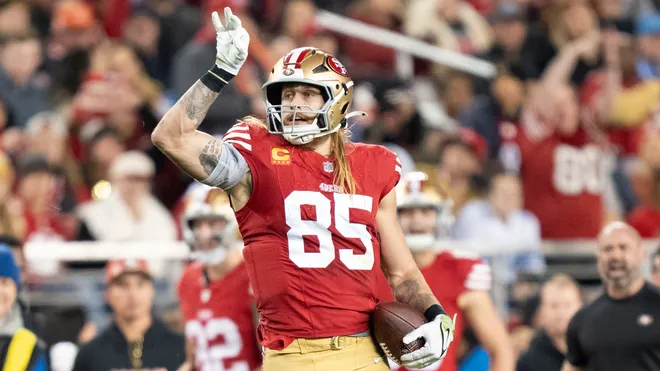
George Kittle — Right Achilles Reconstruction
Injury
Kittle tore his right Achilles tendon during San Francisco’s playoff game on January 11 and subsequently underwent surgical repair.
Expected Time Missed
Kittle has participated in multiple practices and traveled with the 49ers to Australia. He is trending toward playing Week 1, although a limited snap and route workload remains possible.
Primary Beneficiary If Time Missed
Jake Tonges would receive additional tight-end snaps, although Christian McCaffrey and San Francisco’s wide receivers would be more likely to absorb Kittle’s fantasy-relevant targets.
Analysis
Kittle’s accelerated return from Achilles surgery is impressive, but I doubt he has regained his full explosiveness this quickly, especially at his age. The calf and Achilles must generate significant force during push-off, acceleration, jumping, and changing direction. Even when an athlete is medically cleared, restoring full calf strength, tendon stiffness and reactive power can take considerably longer.
Kittle’s route-running ability, physicality and feel for finding open space should allow him to remain productive, particularly near the goal line. However, I expect some early limitations in separation and yards after the catch, and his workload may be managed as he rebuilds game conditioning. Kittle can still be a useful fantasy tight end, but expecting the same explosive player immediately after such a fast return would be aggressive.
Sam LaPorta — Hip Injury
Injury
LaPorta injured his hip after absorbing a hit during practice in mid-August.
Expected Time Missed
LaPorta returned to practice on August 25 after missing less than one week. He is expected to be ready for Week 1.
Primary Beneficiary If Time Missed
Brock Wright would receive the largest increase in tight-end snaps. Amon-Ra St. Brown and Detroit’s other receivers would be more likely to absorb LaPorta’s vacated targets.
Analysis
LaPorta should be completely fine. Based on the mechanism and current reporting, this was likely a hip pointer, a painful bruise along the lateral hip. Hip pointers can make running, cutting, and absorbing contact extremely uncomfortable while the bruise is present, but they do not typically create lasting structural problems. Once the pain resolves, function should return without a meaningful decline in fantasy production.
My larger concern is the back injury that required surgery last season. That history adds to LaPorta’s overall injury and availability risk, but it should not negatively affect his performance while he is healthy. The current hip injury does not change my fantasy outlook for him.
Tucker Kraft — Right ACL Reconstruction
Injury
Kraft tore the ACL in his right knee on November 2, 2025.
Expected Time Missed
Kraft has returned to team drills and expects to be a full participant for Week 1. He will be approximately 10 months removed from the injury when Green Bay opens its season.
Primary Beneficiary If Time Missed
Green Bay would likely distribute Kraft’s targets among its wide receivers and remaining tight ends if he experiences a setback or begins the season with a restricted workload.
Analysis
Kraft’s recovery is progressing extremely well, but returning to play and returning to full strength are not the same thing. Following an ACL reconstruction, quadriceps strength, power, and neuromuscular control often continue improving well after an athlete is cleared. I expect Kraft to look much closer to his pre-injury self by the middle of the season, but he may lack some explosiveness and yards-after-catch ability early.
That does not mean he cannot help fantasy managers in the meantime. Kraft’s size, physicality, and ability to find openings in the defense should still allow him to move the chains and remain a reliable red-zone target. Even if his snap count or athletic ceiling is temporarily limited, he should still offer touchdown upside and likely be a startable fantasy tight end early in the season.
Final Thoughts
Twenty highly relevant fantasy players are still dealing with injuries or completing their return-to-play progression as Week 1 approaches. Ashton Jeanty, Emeka Egbuka, Malik Nabers, George Kittle and Kyle Monangai remain among the most important situations to monitor.
The new injuries to D’Andre Swift and Rome Odunze also make Chicago one of the most important teams to follow. Swift, Odunze and Monangai are all dealing with unresolved injuries, while Luther Burden III has only recently returned from his groin strain.
The release of official Week 1 practice reports will provide the next major checkpoint. Consecutive full practices will carry considerably more weight than limited individual work or rehabilitation on the side.
For complete injury profiles, historical risk factors and recovery outlooks for more than 150 players, purchase the 2026 Fantasy Football Draft Injury Guide.